

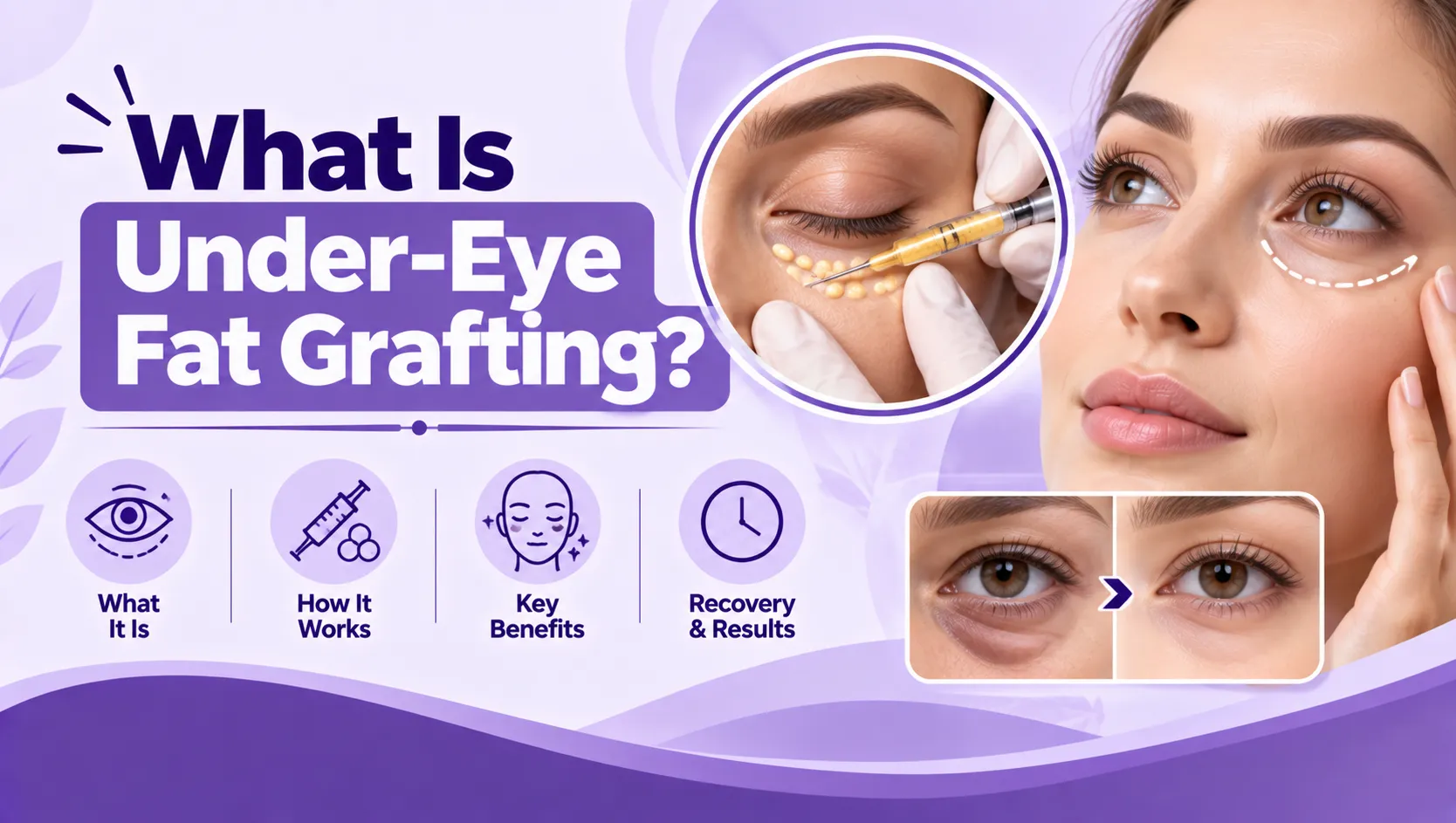
What Is Under-Eye Fat Grafting?
Under-eye fat grafting is a cosmetic procedure that transfers your own body fat to the lower eyelids to fill hollows, reduce shadows, and smooth wrinkles.
Loss of volume beneath the eyes can make the area look sunken, darker, or tired. During the procedure, fat is taken from another part of the body, processed, and carefully grafted under the eyes to restore volume and create a smoother appearance.
In this blog, we’ll discuss how under-eye fat grafting works, its benefits, risks, recovery, and who may be a suitable candidate.
What Is Under-Eye Fat Grafting?
Under-eye fat grafting is a procedure used to restore volume in hollow or sunken areas beneath the eyes. Fat is harvested from another part of the body, such as the abdomen, hips, or thighs, using liposuction.
The harvested fat is then processed and carefully grafted into the area beneath the lower eyelids. By restoring lost volume, the procedure can help soften under-eye hollows and create a smoother, more refreshed appearance.
Why Do People Consider Under-Eye Fat Grafting?
Loss of volume beneath the eyes can occur with aging and may also be influenced by genetics, weight changes, and individual facial structure. People may consider under-eye fat grafting if they have:
- Noticeable under-eye hollows or sunken areas
- Shadows caused by volume loss
- Loss of volume associated with aging
- A tired or hollow appearance around the eyes
- Fine lines associated with volume loss
However, not all dark circles are caused by volume loss. Skin pigmentation, visible blood vessels, allergies, trauma, and other skin changes can also contribute to dark circles. In such cases, fat grafting may not address the underlying cause.
How Does Under-Eye Fat Grafting Work?
Under-eye fat grafting generally involves several steps:
1. Consultation
Your surgeon will assess your facial structure, under-eye area, skin quality, and volume loss while discussing your concerns and treatment goals.
2. Fat Harvesting
A small amount of fat is collected from an area such as the abdomen, hips, or thighs using liposuction.
3. Fat Processing
The harvested fat is processed to separate and prepare the fat cells that will be used for grafting.
4. Fat Grafting
The prepared fat is carefully placed beneath the lower eyelids to restore volume and create a balanced appearance. Because the under-eye area is delicate, precise technique is important.
The procedure may be performed on an outpatient basis, depending on the individual case and the type of anesthesia used.
What Are the Benefits of Fat Grafting Under Eyes?
One of the main advantages of under-eye fat grafting is that it uses your own tissue.
Benefits may include:
- Soft, natural-looking volume beneath the eyes.
- No artificial filler material is used.
- Long-lasting results, as some of the transferred fat may remain permanently.
- Improvement in the appearance of under-eye hollows by restoring lost volume.
However, not all of the grafted fat is preserved, and the amount retained can vary from person to person.
Under-Eye Fat Grafting vs Dermal Fillers
Both under-eye fat grafting and dermal fillers can be used to restore volume, but they are different procedures.
Dermal fillers use an injectable material, while fat grafting uses your own fat, which is harvested from another area of the body, processed, and carefully placed beneath the eyes.
Fat grafting also involves an additional fat-harvesting step, making it a more extensive procedure than a typical filler treatment.
The right option depends on factors such as your facial structure, degree of volume loss, treatment goals, and overall health.
Who May Be a Suitable Candidate?
You may be a suitable candidate for under-eye fat grafting if you have visible hollows or volume loss beneath the eyes and enough fat available for harvesting.
Your doctor may also consider:
- General health
- Skin quality
- Facial structure
- Cause of the under-eye concern
- Medications
- Smoking or nicotine use
- Pregnancy or breastfeeding
- Expectations from treatment
People with insufficient body fat may not have enough tissue available for harvesting. Smoking or nicotine use may also affect the healing process.
What Are the Risks of Under-Eye Fat Grafting?
Like other cosmetic procedures, under-eye fat grafting has some potential risks, including:
- Bruising
- Swelling
- Bleeding
- Infection
- Cysts or lumps
- Skin damage
- Scarring
- Uneven results
Because the procedure is performed around the eyes, there are additional risks. If the injected fat enters a blood vessel, it can affect blood flow and, in rare cases, may affect vision.
For this reason, proper technique and treatment by a qualified, experienced medical professional are important.
Conclusion
Under-eye fat grafting can help restore lost volume beneath the eyes and improve the appearance of hollows and shadows, creating a smoother and more refreshed look. However, results can vary from person to person, as some of the grafted fat may be absorbed over time.
Because the under-eye area is delicate, choosing the right treatment and having it performed with proper care is important. If you are considering under-eye fat grafting, Dr. Preeti Yadav, best plastic surgeon in Gurgaon, can evaluate your concerns and help you understand the treatment options suited to your facial structure and goals.
Frequently Asked Questions
1. Is under-eye fat grafting painful?
The procedure is performed with anesthesia, so you should not feel significant pain during the treatment. Some soreness or discomfort may occur during recovery.
2. How long does swelling last after under-eye fat grafting?
Swelling and bruising are common after the procedure and gradually improve as the area heals. The under-eye area may take several months to fully settle.
3. How long do the results of under-eye fat grafting last?
Some of the grafted fat may remain for a long time, potentially providing long-lasting results, while some fat is naturally absorbed by the body.
4. Who is not a suitable candidate for under-eye fat grafting?
People with insufficient body fat for harvesting may not be suitable candidates. Smoking, pregnancy, breastfeeding, certain medications, and individual health factors may also affect suitability.
5. Can under-eye fat grafting cause lumps?
Lumps or unevenness can occur as possible complications of fat grafting. A proper evaluation and careful technique are important when treating the delicate under-eye area.
6. When can I return to normal activities after under-eye fat grafting?
Recovery varies depending on the amount of fat harvested and the individual procedure. Your surgeon will advise you when it is safe to resume work, exercise, and other normal activities.