


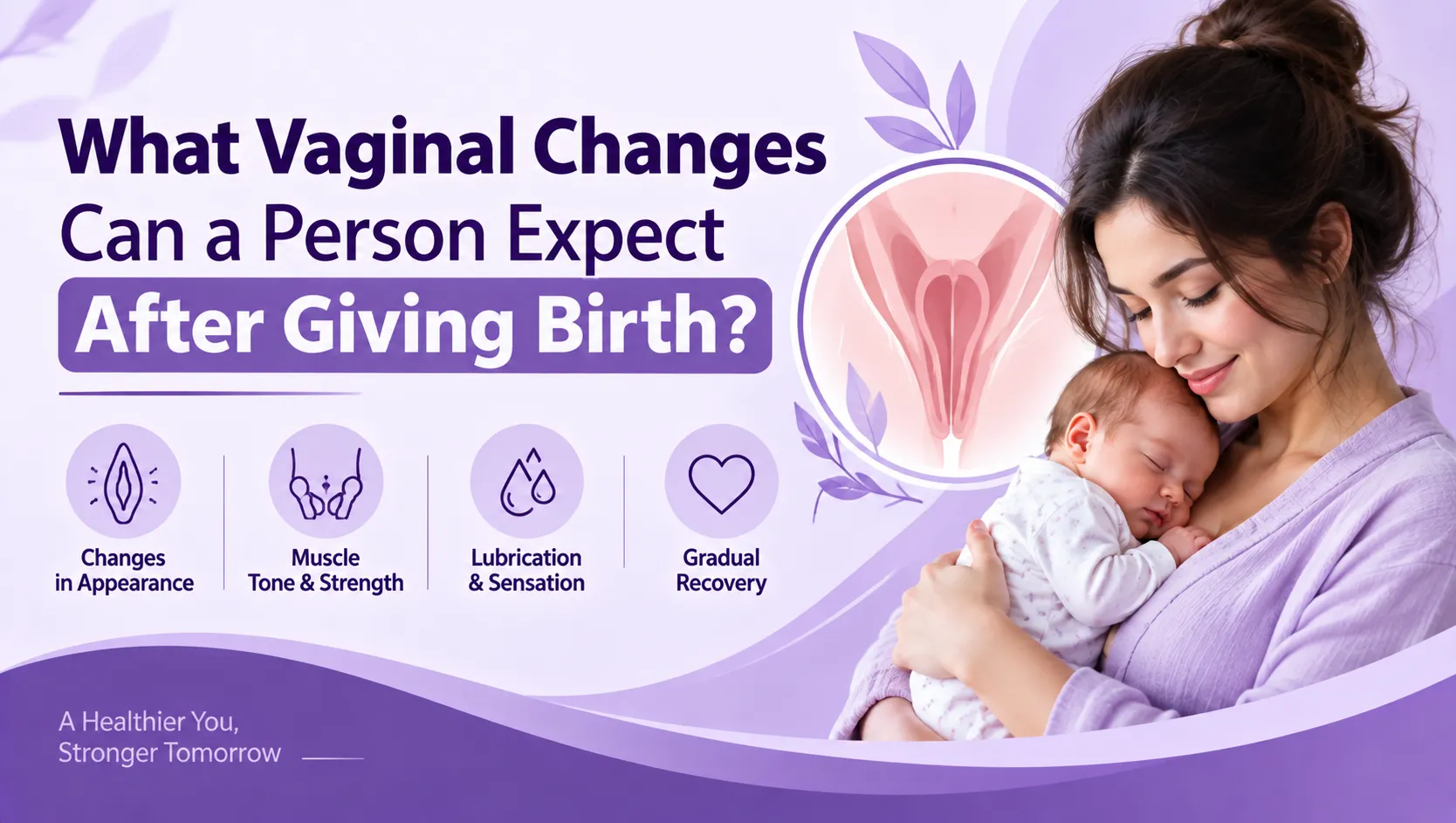
What Vaginal Changes Can a Person Expect After Giving Birth?
Pregnancy and childbirth can bring many physical changes, and the vaginal area can also look and feel different after giving birth. These changes are especially noticeable after a vaginal delivery, when the vaginal tissues and pelvic floor stretch during childbirth.
Swelling, soreness, dryness, changes in sensation, and temporary pelvic floor weakness can occur during the postpartum recovery period. While many of these changes improve with time, recovery is different for every woman, and some changes may last longer than others.
In this blog, we’ll discuss the common vaginal changes after childbirth, how the vagina and vulva may look during recovery, whether they return to their previous appearance, and when it is important to consult a doctor.
How Does the Vagina Change After Giving Birth?
During a vaginal delivery, the vaginal canal, surrounding tissues, and pelvic floor muscles stretch to allow the baby to pass through. After delivery, the vaginal opening and surrounding tissues may appear swollen, stretched, or bruised, especially if you experienced a vaginal tear or episiotomy.
Most of these changes improve as the body heals. However, some women may continue to notice changes in vaginal sensation, pelvic floor strength, or overall comfort. If these concerns persist after recovery, vaginal tightening may be one of the treatment options considered after a proper evaluation.
Common Vaginal Changes After Childbirth
1. Swelling and Tenderness
Tenderness in the area of the vagina and perineum after birth is fairly common. It can become especially obvious after a complicated childbirth process, vaginal tear or episiotomy.
Gradually symptoms should get better with postpartum recovery. Following recommendations of your doctor regarding hygiene, pain treatment and postpartum recovery can assist the recovery process.
2. Vaginal Tear or Episiotomy with Stitches
Some women have vaginal and/or perineal tears while giving birth. Severity of the condition can vary from simple tearing of skin up to serious tearing of muscles.
In the case of an episiotomy, you also need stitches. Recovery time depends on how severe the damage was. Prolonged pain, swelling and problems with stitches need a doctor's attention.
3. Postpartum Bleeding and Discharge
Bleeding post-childbirth is known as lochia, and is a mix of blood and tissue from the uterus. Postpartum spotting is completely normal.
The bleeding becomes lighter over time. Larger blood clots and heavy bleeding are also a cause for concern, as is rapid or excessive bleeding.
4. Vaginal Dryness
Vaginal dryness post-childbirth is due to hormonal changes. Breastfeeding can also cause this as a side effect of lower estrogen levels.
The dryness can make intercourse very uncomfortable. When dryness is prolonged or begins to cause discomfort, intercourse should stop and you should consult your nurse.
5. Changes During Sex
Sexual activity may feel different after childbirth. Pain or discomfort can occur because of healing tissues, dryness, scar tissue or changes in the pelvic floor muscles.
There is no need to rush back into sexual activity. Once you have recovered sufficiently and your healthcare provider has advised that it is safe, you can gradually resume sexual activity.
Persistent pain during sex should not be ignored, as an underlying cause may need treatment.
6. Pelvic Floor Changes
Pregnancy and childbirth can weaken or stretch the pelvic floor muscles. This may sometimes result in urinary leakage, particularly while coughing, sneezing, laughing or exercising.
Pelvic floor exercises, including Kegel exercises, can help strengthen these muscles. If leakage continues or affects your daily life, a doctor or pelvic floor physiotherapist can assess the problem.
7. Changes in Vulvar Appearance
The vulva, which refers to the external genital area, may also look different after pregnancy and childbirth. Swelling, stretching and changes in pigmentation can occur.
The appearance usually changes as swelling settles and healing progresses. However, there is considerable natural variation in vulvar appearance, both before and after childbirth.
How Does a Vagina Look After Birth?
Many women search for “How does a vagina look after birth?” about a week after giving birth. Fear not, for most vaginas are swollen, stretched, and maybe even bruised. The vaginal opening will also vaginal opening may even appear to change shape.
Swelling normally goes away, and the skin often heals after childbirth, but the vagina never fully returns to its pre-pregnancy state. It is impossible to say for certain what a “normal” vagina after birth looks like.
Most vaginas will appear different from the images of postpartum vaginas that you are able to find online. Comparing yourself to images of “normal” postpartum vaginas will tell you nothing about the state of your own body.
Vagina Before and After Birth: Does It Return to Normal?
It is meant to stretch during delivery and recover after pregnancy. However, there is some recovery time; hence it will not be the same as before.
The factors that might affect the change include:
- Mode of delivery
- Number of deliveries
- Size and position of the baby
- Length and complexity of labor
- Vaginal tearing or episiotomy
- Strength of pelvic floor
- Tissue elasticity
Hence the difference in the vagina before and after delivery can be great for different people.
Can You Tighten the Vagina After Giving Birth?
If you have experienced weakening of the pelvic floor muscles or changes in sensations within the vagina after giving birth, there are some methods you can try.
Pelvic floor exercise: These include Kegel exercises, which will work to strengthen the pelvic floor muscles.
Pelvic floor physiotherapy: This will be done by a physiotherapist, who will evaluate your pelvic floor function and provide exercises to suit you.
Procedures such as vaginal tightening or rejuvenation do not necessarily need to be done just because you are experiencing normal changes.
When Should You See a Doctor?
Most postpartum changes are normal, but let your physician know if you notice the following:
- Heavy or increasing blood loss from your vagina
- Foul or unpleasant vaginal discharge along with a fever
- Persistent or worsening vaginal or pelvic pain
- Trouble with healing stitches
- Pain or discomfort during sex that doesn't go away
- Inability to fully control your urine
- A lump or mass in your vagina that causes discomfort
You may need an evaluation to find an infection, a problem with the floor of your pelvis or vagina, or Pelvic Organ Prolapse.
Conclusion
Childbirth can lead to changes in the vagina and vulva, including swelling, dryness, changes in sensation, and pelvic floor weakness. Many of these changes improve naturally during postpartum recovery, although some may continue for longer.
Every woman’s recovery is different, and there is no single “normal” appearance after childbirth. If you continue to experience discomfort, changes in sensation, or concerns about vaginal laxity after recovery, it is best to discuss them with a qualified doctor. Vaginal tightening may be considered in suitable cases after a proper evaluation.
Dr. Preeti Yadav, one of the best plastic surgeons in Gurgaon, can assess your concerns and discuss suitable treatment options based on your individual needs and goals.
Frequently Asked Questions
1. How long does it take for the vagina to heal after childbirth?
Recovery varies from person to person. Swelling, soreness, and other changes usually improve gradually as the tissues heal, but the recovery period can be longer after tears, episiotomy, or other complications.
2. When can I have sex after giving birth?
There is no fixed time that applies to everyone. You can resume sexual activity when you feel physically and emotionally ready and your postpartum healing has progressed. If sex remains painful, speak with your doctor.
3. Why is sex painful after childbirth?
Pain during sex can be related to vaginal dryness, healing tissues, scar tissue from a tear or episiotomy, or changes in the pelvic floor. Persistent pain should be evaluated by a healthcare professional.
4. Does breastfeeding cause vaginal dryness?
Yes. Breastfeeding can be associated with lower estrogen levels, which may cause vaginal dryness and make intercourse uncomfortable for some women.
5. Can childbirth cause urinary leakage?
Yes. Pregnancy and childbirth can weaken or stretch the pelvic floor muscles, which may contribute to urine leakage, particularly when coughing, sneezing, laughing, or exercising. Pelvic floor exercises can help improve muscle strength and control.
6. What is vaginal laxity after childbirth?
Vaginal laxity refers to a feeling of reduced tightness or changes in vaginal sensation that some women may notice after pregnancy and childbirth. It can be associated with changes in the pelvic floor and surrounding tissues.
7. Can vaginal tightening help after childbirth?
Depending on the underlying concern, vaginal tightening may be considered for women who continue to experience bothersome changes after postpartum recovery. A proper evaluation is important to determine whether treatment is appropriate.
8. How long should I wait before considering vaginal tightening after childbirth?
It is generally important to allow adequate time for postpartum healing before considering an elective procedure. The appropriate timing depends on your recovery, symptoms, breastfeeding status, and individual health, so it should be discussed with a qualified doctor.
9. Can a vaginal tear or episiotomy cause long-term discomfort?
Most tears and episiotomies heal with time, but some women may experience persistent pain, scar sensitivity, or discomfort. If symptoms continue after healing, a medical evaluation can help identify the cause.