

Symptoms and Causes of Wrinkles
Wrinkles are a natural part of aging, but have you ever wondered why some people develop them earlier than others? They appear as fine lines, creases, and folds on the skin, gradually changing its appearance and texture.
While aging is one of the main causes, factors such as sun exposure, genetics, smoking, and repeated facial expressions can also contribute to wrinkle formation. Depending on the type and severity of wrinkles, treatments such as Botox may help reduce the appearance of certain facial lines.
In this blog, we'll explore the common symptoms and causes of wrinkles, ways to prevent premature skin aging, and the professional treatment options available.
What Are the Most Common Symptoms of Wrinkles?
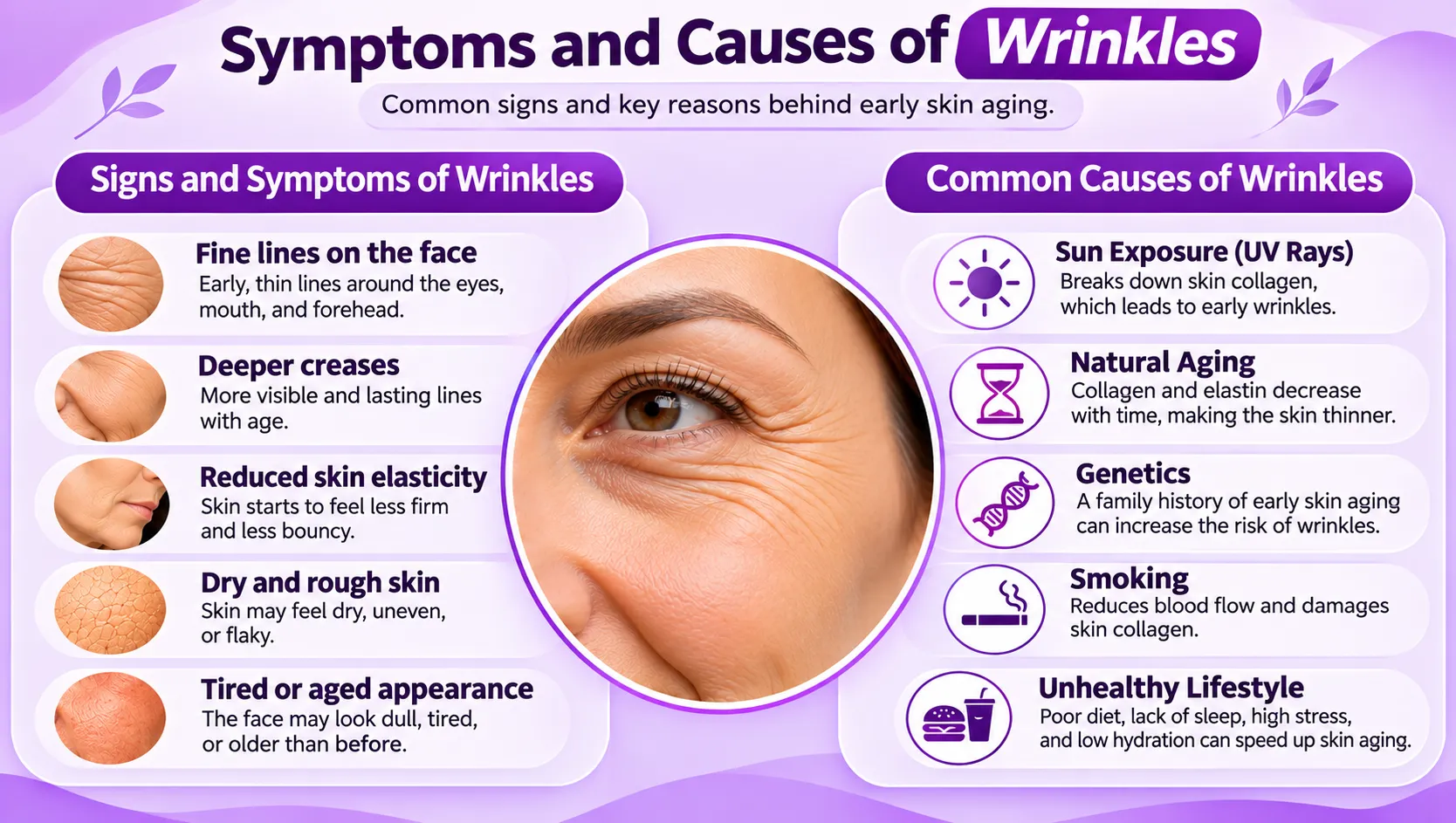
The gradual development of wrinkles can make their signs and symptoms hard to pinpoint. Some signs of wrinkles may vary based on your age, skin type, lifestyle, and other factors. Some of those signs may include:
Fine Lines and Creases
Fine lines are one of the earliest signs of skin aging. These lines are often located near the eyes, on the forehead, and around the mouth. Fine lines are often harder to notice on a resting face.
Deep Facial Wrinkles
Where fine lines are early signs of skin aging, the deep wrinkles that develop from fine lines are more advanced signs of skin aging. Deep facial wrinkles often develop along the forehead, between the eyebrows, and surrounding the nose and mouth.
Crow’s Feet and Smile Lines
Often, the fine lines that develop along the outer corners of the eyes are referred to as crow’s feet. Smile lines, also known as nasolabial folds, are the creases that extend from the sides of the nose to the corners of the mouth.
Loose and Sagging Skin
As the natural collagen and elastin in your skin break down and underlying facial fat is reduced, facial skin can sag and cause deeper wrinkles to be more pronounced.
Changes in Skin Texture
The natural loss of collagen and elastin over time can cause the skin to become thinner and drier, resulting in a lack of smoothness and fine lines and wrinkles becoming more pronounced.
What Are the Primary Causes of Wrinkles?
There are both natural and unnatural or environmental causes of wrinkles. Knowing the causes of wrinkles can help you with your skin care and prevention goals.
1. Natural Aging
One of the most well-known causes of wrinkles is aging. The skin thins and loses its firmness over the years as it produces less collagen and elastin.
As the natural oils and moisture produced by the skin decline, it also becomes thinner, and the fat layer underneath the skin is reduced, resulting in loss of facial volume and the formation of deeper folds.
2. Sun Exposure and UV Radiation
As previously mentioned, one of the most common causes of premature skin aging is exposure to the sun. Ultraviolet rays damage the elastic fibers of the skin and reduce its ability to remain smooth and firm, leading to loss of elasticity and premature wrinkling.
Prolonged exposure to UV rays causes visible signs of skin aging and damage. As a result, skin cancers, as well as sun-related wrinkles, can develop on areas like the face, neck, arms, legs, and hands.
3. Smoking
Smoking has damaging effects on the skin and can accelerate skin aging. The chemicals in tobacco increase oxidative stress, which in turn damages the fibers that support the skin. Poor circulation caused by smoking can also reduce the skin’s ability to stay smooth, firm and elastic. This can lead to the formation of deep folds and lines around the mouth, eyes, and forehead at a premature age.
4. Repeated Facial Expressions
Over time, the temporary folds that are created in the skin by facial expressions like smiling, frowning or squinting can become deeper and permanent.
For example, squinting causes crow's feet, and frowning causes lines between the eyebrows.
5. Genetics and Family History
Genetics can affect how quickly you age, including the timing of when wrinkles begin to appear. Other factors related to your skin, including thickness, elasticity, natural pigmentation and collagen production, can be partially inherited.
This is why some people start developing wrinkles earlier than others, despite the same skincare routine and lifestyle.
6. Environmental Factors
Many environmental factors can lead to oxidative stress and damage the skin. Long-term exposure to pollution and combined with insufficient skincare and exposure to the sun can accelerate skin aging.
What Can Increase the Risk of Premature Wrinkles?
Although there are numerous factors that affect skin aging, some factors accelerate the process and make skin aging more evident.
Some common factors include:
- Long-term exposure to the sun: UVA rays break down collagen and elastin causing the skin to lose elasticity.
- Smoking: cigarettes contain toxins that accelerate skin aging.
- Poor skincare: Not properly moisturizing your skin can lead to fine lines.
- Unhealthy diet: Eating an unhealthy diet without proper nutrients can also affect your skin.
- Stress: Chronic stress releases hormones that lead to inflammation.
- Environmental pollution: Oxidative stress accelerates the process of skin aging.
- Genetics: Skin aging is also affected by your family history.
How Can You Prevent or Minimize Wrinkles?
From your 20s, you start producing less collagen. Although you can't completely avoid wrinkles due to the natural process of aging, adopting healthy habits can slow down the process and allow you to maintain healthier-looking skin.
1. Protect your skin from the sun
Premature aging from the sun's UVA rays can be prevented by applying sunscreen, which has a broad spectrum (UVA/UVB) and an SPF of 30 or more, every day.
Sunscreen should be reapplied as recommended (generally every 2 hours), especially if you are sweating or swimming.
Wear a wide-brimmed hat and sunglasses. Protective clothing is also recommended.
Avoid going out in the sun during the peak hours of the day.
2. Have a Skincare Routine
Cleansing your face and moisturizing are key to having healthy, radiant skin.
Dermatologists also recommend skincare products that contain retinol, vitamin C, and/or niacinamide.
3. Healthy Lifestyle Habits
Your day-to-day habits can be good or bad for your skin.
Being well hydrated is key to maintaining healthy skin. The same goes for eating a healthy, balanced diet, getting enough quality sleep, and avoiding smoking and other environmental toxins.
When should you consider professional wrinkle treatment?
If fine lines, deep wrinkles, or loose skin impacts your appearance or confidence, you might want to think about seeing a plastic surgeon or dermatologist. This will allow the professional to analyze your problem and decide which wrinkles you have, what is the state of your skin, and which treatments would be best for you.
Depending on your needs, possible treatments include injections against wrinkles, fillers, laser skin resurfacing, and other skin regeneration treatments. Those who have a lot of skin laxity might require surgery. It all depends on the state of your skin, medical history, and what you need.
Conclusion
Although wrinkles are a natural part of aging, factors such as sun exposure, smoking, and lifestyle habits can contribute to their early appearance. Following a good skincare routine, protecting your skin from the sun, and maintaining healthy habits can help delay premature signs of aging.
If fine lines, deep wrinkles, or loose skin are affecting your appearance or confidence, professional cosmetic treatments may help improve your skin's appearance. Dr. Preeti Yadav, a plastic surgeon in Gurgaon, can assess your concerns and recommend suitable facial rejuvenation options based on your skin condition and aesthetic goals.
Frequently Asked Questions (FAQs)
1. What is the main cause of wrinkles?
The main cause of wrinkles is natural aging. As the skin ages, it gradually loses collagen and elastin, making it less firm and elastic. Other factors, such as sun exposure, smoking, and environmental damage, can also contribute to wrinkle formation.
2. At what age do wrinkles usually start appearing?
Fine lines may start appearing in the late 20s or early 30s, although this varies from person to person. Genetics, skin type, lifestyle, and sun exposure can all influence when wrinkles become noticeable.
3. What are the first signs of wrinkles?
The first signs are usually fine lines around the eyes, mouth, and forehead. They may initially appear when making facial expressions, but can gradually become visible even when the face is relaxed.
4. Can sun exposure cause premature wrinkles?
Yes. Prolonged exposure to UV rays can damage collagen and elastin, which help keep the skin firm and elastic. Over time, this damage can lead to premature wrinkles and other visible signs of skin aging.
5. How can I prevent wrinkles naturally?
You can help delay premature wrinkles by applying sunscreen daily, keeping your skin moisturized, eating a balanced diet, staying hydrated, and avoiding smoking. These habits support skin health, although they cannot completely prevent natural aging.
6. Can wrinkles be reduced permanently?
The results depend on the treatment. Non-surgical treatments may provide temporary or long-lasting improvements, while surgical procedures can offer more lasting changes. However, no treatment can completely stop the natural aging process.
7. What is the difference between fine lines and deep wrinkles?
Fine lines are shallow creases that usually appear as early signs of aging. Deep wrinkles are more pronounced folds or lines that become visible as collagen and elastin levels decrease over time.
8. Which treatments are available for facial wrinkles?
Several treatments are available, including Botox injections, dermal fillers, laser treatments, and skin rejuvenation procedures. The most suitable option depends on the type of wrinkles, skin condition, and individual aesthetic goals.
9. Can wrinkles appear even at a young age?
Yes. Wrinkles can develop at a younger age due to factors such as excessive sun exposure, smoking, genetics, and repeated facial expressions. Fine lines may also become noticeable earlier depending on individual skin characteristics.
10. When should I consider professional treatment for wrinkles?
You may consider professional treatment if wrinkles, fine lines, or skin laxity are affecting your appearance or confidence. A qualified professional can assess your skin and recommend suitable treatment options based on your concerns.