

Monolid vs Double Eyelid: What Is the Difference?
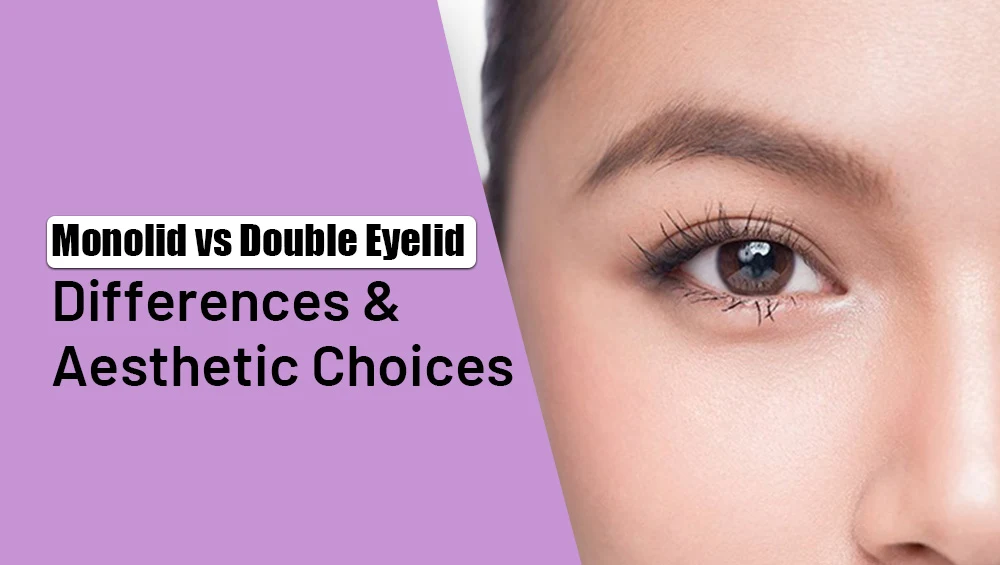
The main difference between a monolid and a double eyelid is the presence of a visible crease in the upper eyelid. A monolid, also called a single eyelid, has no clearly visible upper-eyelid crease, while a double eyelid has a defined fold above the eyelashes.
Both are normal variations of eyelid anatomy. Eyelids can also differ in crease height, shape, upper-lid fullness, skin thickness, and the presence of an epicanthal fold near the inner corner of the eye.
Some people naturally have monolids, while others have low, hidden, tapered, or parallel eyelid creases. There is no single eyelid type that is medically better or more attractive than another.
In this guide, we explain single eyelid vs double eyelid, different eyelid types, common monolid and double-eyelid patterns, whether monolids can become double eyelids, and the cosmetic options available for people who want to change their eyelid crease.
What Is a Monolid or Single Eyelid?
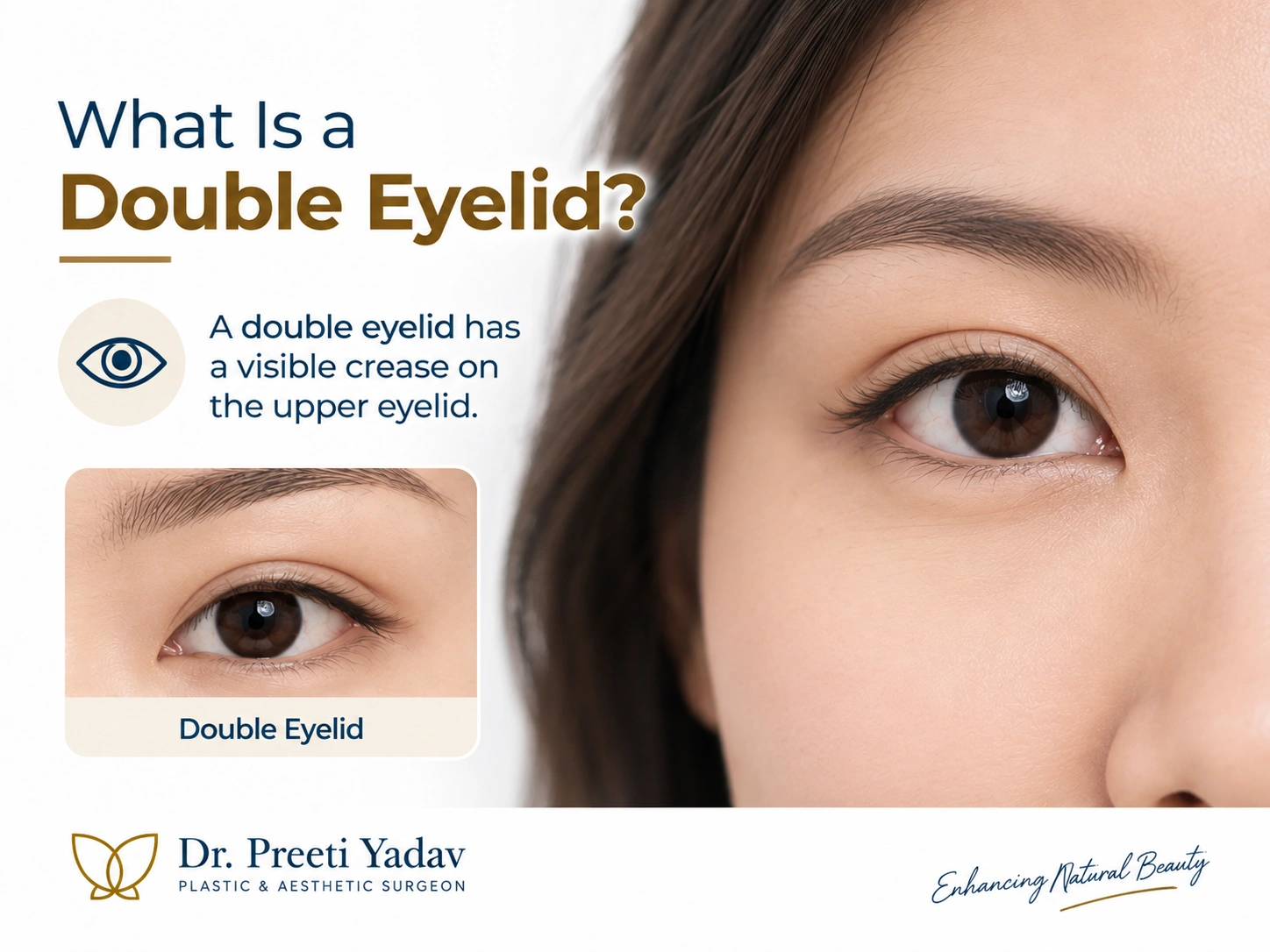
A monolid, also known as a single eyelid, is an upper eyelid without a clearly visible crease above the eyelashes. Instead of a distinct fold, the skin of the upper eyelid may appear relatively smooth from the eyebrow area toward the lash line.
Monolids are a normal anatomical variation and are particularly common among people of East and Southeast Asian ancestry, although they can occur in people from many backgrounds.
A monolid may have:
- No visible upper-eyelid crease
- A very low or hidden crease
- More or less upper-lid fullness
- An epicanthal fold near the inner corner of the eye
- Slight differences between the two eyes
It is also important to understand that a monolid is not the same as an epicanthal fold.
An epicanthal fold is a fold of skin near the inner corner of the eye. It may occur with monolids, but it can also be present in people who have visible double eyelids.
What Is a Double Eyelid?
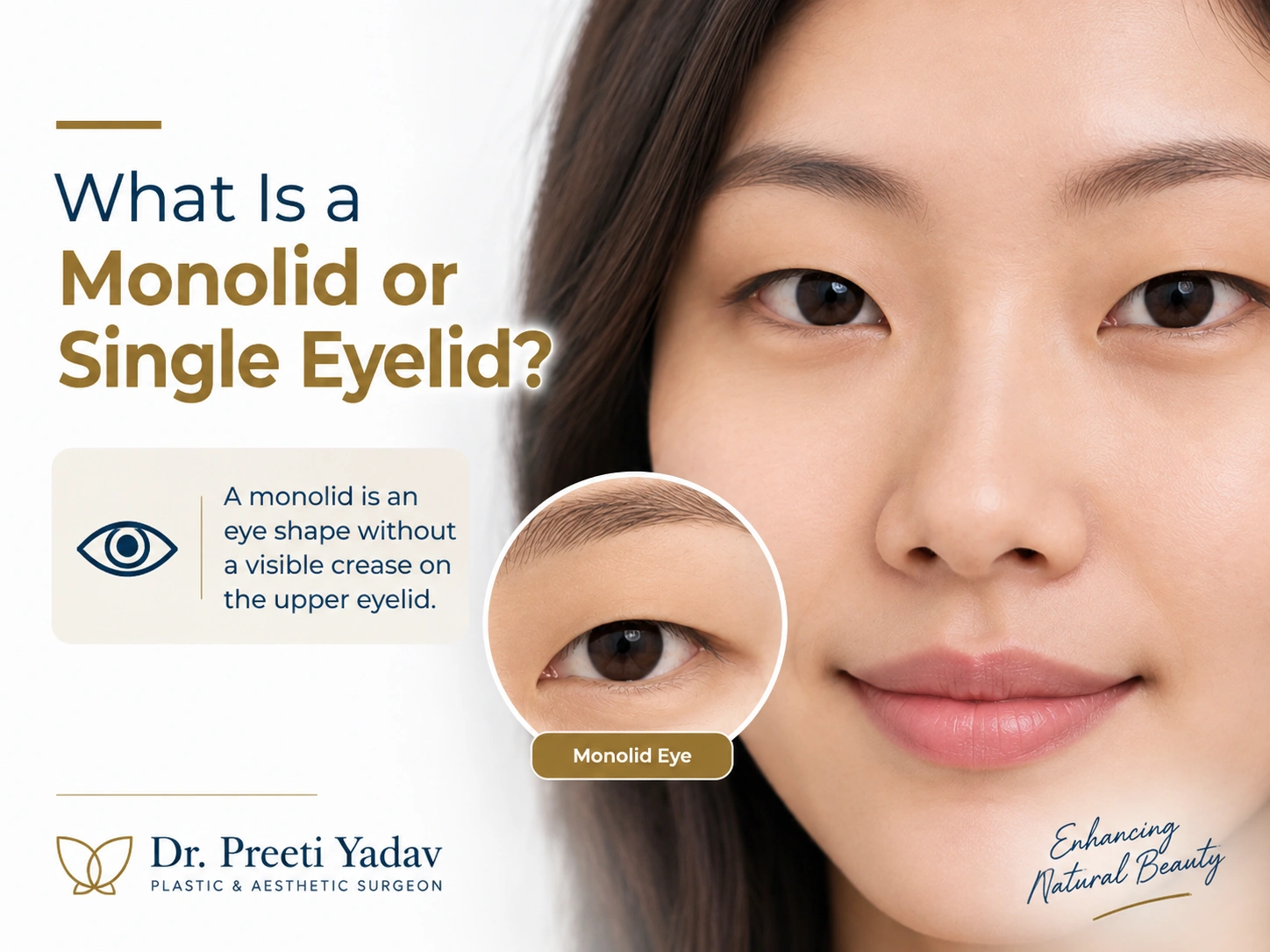
A double eyelid has a visible crease or fold in the upper eyelid above the lash line. This crease is sometimes called the supratarsal crease.
The height and shape of the crease can vary considerably from person to person. Some people have a low and subtle crease, while others have a higher or more clearly defined fold.
A double eyelid may be:
- Low or high
- Shallow or deep
- Tapered toward the inner corner
- Parallel to the lash line
- Symmetrical or slightly different between the two eyes
A double eyelid is simply another natural anatomical variation and does not indicate better vision or eye health.
Single Eyelid vs Double Eyelid: Key Differences
The main difference between a single eyelid and a double eyelid is the visible upper-eyelid crease.
Neither eyelid type is medically superior to the other.
What Are the Different Types of Eyelids?
Eyelids cannot always be divided into only two strict categories. Upper-eyelid anatomy exists on a spectrum, and several crease patterns may be seen.
1. Single Eyelid or Monolid
There is no clearly visible crease in the upper eyelid.
2. Low or Hidden Eyelid Crease
A crease is present, but it sits low on the eyelid or becomes partly hidden when the eye is open. Some people may appear to have a monolid from certain angles even though a small crease is present.
3. Double Eyelid
A visible crease is present above the eyelashes. The crease may vary in height, shape, depth, and relationship with the inner corner of the eye. Other characteristics such as eyelid hooding, skin thickness, ptosis, or an epicanthal fold can also affect how the eyelid looks.
Are There Different Types of Monolids?
There is no single universally accepted list of fixed monolid types. Monolid appearance can vary depending on several anatomical features.
These differences may include:
No Visible Crease
The upper eyelid appears smooth without a defined fold.
Very Low or Hidden Crease
A subtle crease may exist close to the lash line but may not be clearly visible when the eyes are open.
Fuller Upper Eyelid
Some monolids have more soft tissue or fullness in the upper eyelid.
Less Full Upper Eyelid
Others may have a thinner or flatter upper-lid appearance.
Monolid With an Epicanthal Fold
An epicanthal fold may cover part of the inner corner of the eye.
Slightly Asymmetrical Monolids
One eyelid may appear fuller or show a more visible crease than the other. These are normal variations and do not necessarily indicate an eyelid problem.
What Are the Different Types of Double Eyelids?
Double eyelids can also have different crease patterns. Two commonly discussed patterns are tapered and parallel double eyelids.
Tapered Double Eyelid
In a tapered double eyelid, the crease becomes narrower as it approaches the inner corner of the eye. The crease may appear to blend into the inner eyelid area.
This pattern is common and can look subtle depending on the person's anatomy.
Parallel Double Eyelid
In a parallel double eyelid, the crease remains relatively separate from the lash line as it approaches the inner corner. This creates a more consistently visible fold across the upper eyelid.
Infold Double Eyelid
In an infold pattern, the inner portion of the crease sits below or becomes partly hidden by the epicanthal fold.
On-Fold Double Eyelid
In an on-fold pattern, the crease meets approximately at the level of the epicanthal fold.
Outfold Double Eyelid
In an outfold pattern, the upper-eyelid crease remains above the epicanthal fold near the inner corner. These crease descriptions are useful for understanding eyelid anatomy, but not every person's eyelids fit perfectly into one category.
What Is the Difference Between a Monolid and a Hooded Eyelid?
A monolid and a hooded eyelid are not the same thing. A monolid does not have a clearly visible upper-eyelid crease. A hooded eyelid usually has a crease, but excess or overlapping skin may partially cover it when the eyes are open.
Some people can have both a low crease and significant hooding, which may make the eyelid difficult to classify based on appearance alone.
Are Monolids or Double Eyelids More Attractive?
Neither monolids nor double eyelids are inherently more attractive. Attractiveness is subjective and depends on factors such as:
- Individual preferences
- Overall facial proportions
- Cultural beauty standards
- Makeup style
- Personal identity
- Eyebrow and eye shape
Both monolids and double eyelids are normal variations of human anatomy. Some people prefer the smooth appearance of monolids, while others prefer a visible crease. Neither preference makes one eyelid type universally better.
Cosmetic eyelid procedures should therefore be based on an individual's own goals rather than the idea that one eyelid type is more attractive than another.
Can Monolids Become Double Eyelids?
Sometimes a visible eyelid crease may appear or change over time. This does not always mean that the eyelid anatomy has permanently changed. Several factors can affect how visible an eyelid crease appears.
Temporary or Variable Creases
A crease may appear differently because of:
- Swelling
- Fatigue
- Changes in skin position
- Aging
- Changes in upper-lid fullness
Some people may occasionally notice a temporary crease that disappears later.
Eyelid Tape or Glue
Eyelid tape or cosmetic adhesive can temporarily create the appearance of a double-eyelid crease. However, the effect is temporary and usually disappears after the tape or adhesive is removed. Frequent use may also cause skin irritation in some people.
Double Eyelid Surgery
People who want a more planned and long-lasting eyelid crease may consider double eyelid surgery after discussing their goals and anatomy with a qualified plastic surgeon.
What Is Double Eyelid Surgery?
Double eyelid surgery is a cosmetic procedure designed to create or define a visible crease in the upper eyelid. It is a form of upper-eyelid surgery and may be performed using different techniques depending on:
- Eyelid anatomy
- Skin thickness
- Existing crease
- Amount of upper-lid tissue
- Desired crease height
- Personal cosmetic goals
The aim is not to make every eyelid look the same. The crease should be planned according to the individual's facial anatomy.
Incisional Double Eyelid Technique
In the incisional technique, a carefully planned incision is made in the upper eyelid. Depending on the individual, the surgeon may adjust selected skin, fat, or other tissue and create an attachment that forms the desired crease. The incision is usually placed along the planned eyelid crease.
This technique may be considered when:
- A defined crease is desired
- There is excess upper-lid skin
- The eyelid has more fullness
- A previous crease needs revision
Recovery and final results vary from person to person.
Non-Incisional or Suture Double Eyelid Technique
A non-incisional or suture technique may be suitable for selected patients. Instead of creating a full incision, buried sutures are used to form an attachment between the eyelid tissues and create a visible crease.
This approach may involve:
- Smaller entry points
- Less tissue removal
- Different recovery characteristics
However, not everyone is suitable for a non-incisional technique. The choice between techniques depends on individual anatomy and the surgeon's assessment.
Why Do Some People Consider Double Eyelid Surgery?
People may consider double eyelid surgery for different personal reasons.
These can include:
- Creating a visible upper-eyelid crease
- Changing the height of an existing crease
- Improving eyelid symmetry
- Modifying a low or hidden crease
- Changing a tapered crease to another pattern
- Personal cosmetic preference
The goal should be individualized rather than based on the belief that double eyelids are automatically more attractive.
What Are the Possible Risks of Double Eyelid Surgery?
Like any surgical procedure, double eyelid surgery has potential risks.
These may include:
- Swelling
- Bruising
- Temporary discomfort
- Scarring
- Dry or irritated eyes
- Asymmetry
- A crease that is higher or lower than expected
- An overly deep or shallow crease
- Weakening or loss of the created crease
- Difficulty closing the eyes in some cases
- Infection
- Need for revision surgery
Rare but more serious eye-related complications can also occur. A qualified plastic surgeon should discuss potential benefits, limitations, recovery, and risks before surgery.
How Long Does Recovery Take?
Recovery differs depending on the technique used and the individual healing response. Swelling and bruising are common during the early recovery period. Some people may feel comfortable returning to routine activities relatively soon, but visible swelling can take longer to settle.
The eyelid crease may also initially look higher, deeper, or less natural than expected. As swelling reduces, the crease generally becomes softer and more settled. Final healing may take several weeks or longer. Always follow the post-operative instructions provided by your surgeon.
Frequently Asked Questions About Monolids and Double Eyelids
1. What is a single eyelid?
A single eyelid, also known as a monolid, does not have a clearly visible upper-eyelid crease.
2. What is a double eyelid?
A double eyelid has a visible crease or fold above the lash line.
3. What is the difference between a single and double eyelid?
The main difference is the upper-eyelid crease. A single eyelid has no clearly visible crease, while a double eyelid has a defined fold above the eyelashes.
4. Is a monolid the same as a single eyelid?
Yes. The terms monolid and single eyelid are commonly used to describe an upper eyelid without a clearly visible crease.
5. What are the different types of eyelids?
Common broad categories include single eyelids or monolids, low or hidden creases, and visible double eyelids. Additional features such as hooding and epicanthal folds can also affect eyelid appearance.
6. Are there different types of monolids?
Monolids can vary in upper-lid fullness, skin thickness, epicanthal folds, symmetry, and whether a subtle low or hidden crease is present.
7. What are the different types of double eyelids?
Common double-eyelid patterns include tapered and parallel creases. Other descriptions include infold, on-fold, and outfold crease patterns.
8. What is a tapered double eyelid?
A tapered double eyelid has a crease that becomes narrower as it approaches the inner corner of the eye.
9. What is a parallel double eyelid?
A parallel double eyelid has a crease that remains relatively separate from the eyelid margin as it approaches the inner corner.
10. Are monolids or double eyelids more attractive?
Neither is inherently more attractive. Beauty preferences are subjective and depend on personal taste, facial proportions, cultural influences, and individual identity.
11. Can monolids naturally become double eyelids?
A crease can sometimes become more or less visible because of aging, swelling, fatigue, or changes in skin and eyelid tissue. These changes may be temporary or variable.
12. Can eyelid tape permanently create a double eyelid?
No. Eyelid tape can temporarily create the appearance of a crease, but it does not reliably create a permanent anatomical double eyelid.
13. Is double eyelid surgery permanent?
Double eyelid surgery is intended to create a long-lasting crease, but the result can change over time because of aging, healing, tissue changes, or weakening of the crease.
14. Is a monolid unhealthy?
No. A monolid is a normal eyelid variation and usually does not affect vision or eye health.
15. What is the difference between double eyelid surgery and blepharoplasty?
Double eyelid surgery focuses on creating or defining an upper-eyelid crease. Blepharoplasty is a broader term for eyelid surgery and may involve removing or repositioning skin, fat, or other tissue depending on the individual's concern.
Conclusion
The main difference between a monolid and a double eyelid is the presence of a visible crease in the upper eyelid.
A monolid, or single eyelid, usually has no clearly visible crease, while a double eyelid has a defined fold above the eyelashes. Both are normal anatomical variations, and neither is medically superior or inherently more attractive.
There are also several variations within these categories, including hidden creases, tapered double eyelids, parallel creases, and differences related to epicanthal folds and upper-lid fullness.
Some eyelid creases may change naturally with age, swelling, or tissue changes, while eyelid tape can create a temporary crease. For people who want a planned and longer-lasting change, double eyelid surgery may be considered after an individual assessment.
If you are considering eyelid surgery, consultation with a qualified plastic surgeon such as Dr. Preeti Yadav can help you understand your eyelid anatomy, suitable options, expected results, recovery, limitations, and possible risks.