

Labiaplasty Surgery: Benefits, Procedure, Cost and Recovery
Changes in the size or shape of the labia are common, as every woman's body is different. However, for some women, enlarged or elongated labia can cause irritation, rubbing against clothing, or discomfort during activities such as exercise and sexual intercourse. It may also make them feel self-conscious about the appearance of their intimate area.
If these concerns affect daily comfort or confidence, labiaplasty may be one option worth discussing with a qualified surgeon. It is a surgical procedure that reshapes or reduces the size of the labia. Before considering it, women should understand how the surgery is performed, its possible benefits and risks, and the recovery involved.
In this blog, we will discuss who may consider labiaplasty, its benefits, procedure, cost in India, and recovery.
What Is Labiaplasty?
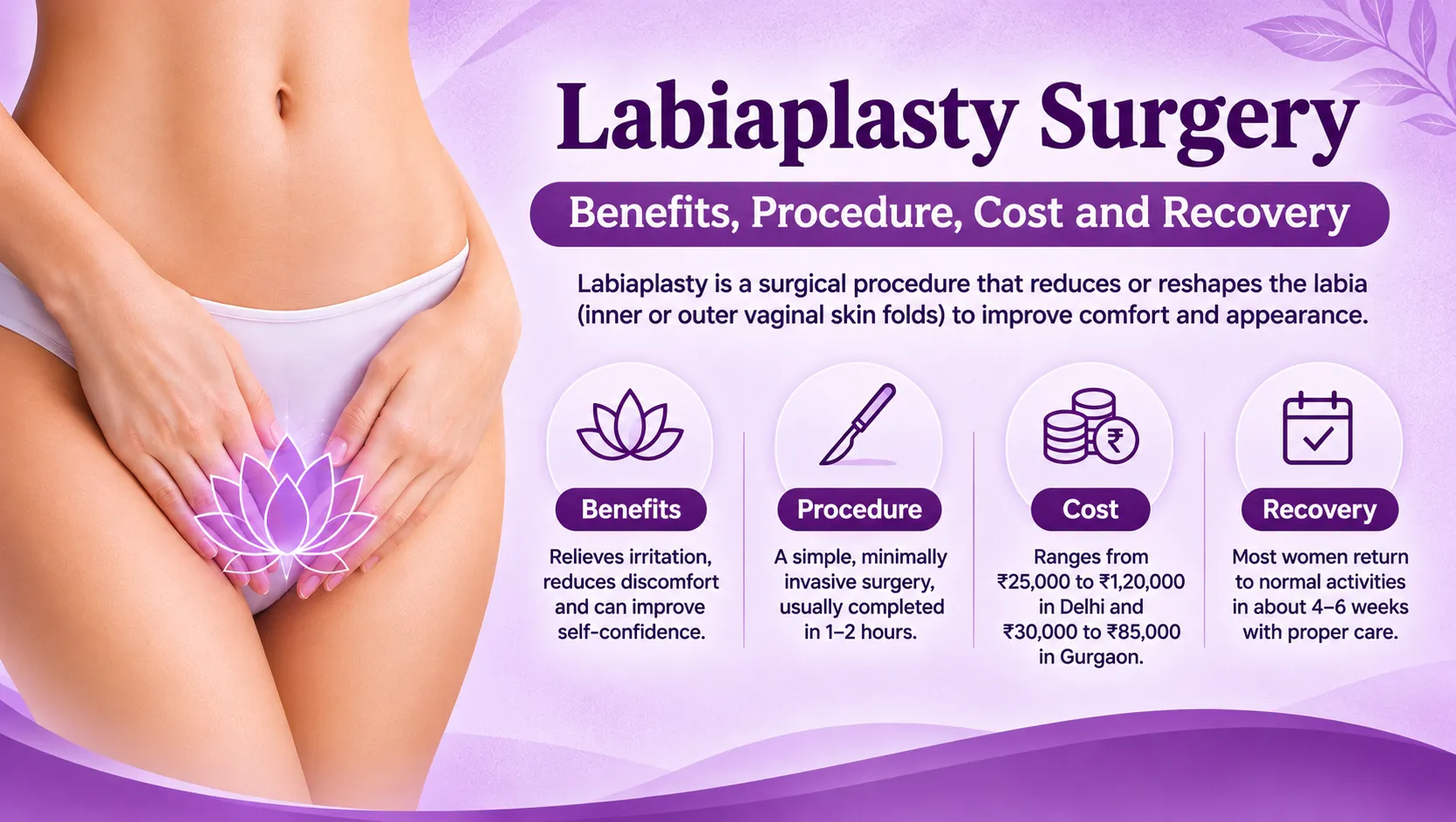
Labiaplasty is a surgical procedure that changes the size or shape of the labia, the folds of skin surrounding the vaginal opening. It usually involves reducing the size of the labia minora (inner lips), although the labia majora (outer lips) can also be treated depending on the patient's concerns.
Some women consider labiaplasty because longer or enlarged labia can cause pulling, rubbing, or irritation during everyday activities. It may also be an option for women who feel uncomfortable with the appearance of their intimate area. Labiaplasty is one of the procedures that may be considered as part of Genital Rejuvenation.
However, labia naturally differ in size, shape, colour, and symmetry. Having larger or uneven labia does not necessarily mean surgery is needed. A consultation with a qualified surgeon can help determine whether labiaplasty is suitable based on individual concerns and expectations.
What Are the Benefits of Labiaplasty?
Labiaplasty is physically and aesthetically beneficial to a woman whose labia is disproportionate.
- Physical Relief: It can provide relief from constant pulling and irritation.
- Can help decrease friction while exercising (i.e., while running or cycling, etc.).
- Can feel better while wearing clothes (i.e., some women do not like wearing tight underwear, etc.).
- Can help to achieve body balance and aesthetic corrections (i.e., some women are not satisfied with the appearance of their labia and may benefit from a labiaplasty, etc.).
- Can help to increase self-esteem and self-confidence (i.e., some women are not satisfied with their body and do not like their private parts, etc.)
On the other hand, doing this surgery does not improve respect for themselves or help to improve their private life.
Who Is a Suitable Candidate for Labiaplasty?
- Women who are bothered and uncomfortable about their appearance can consider this surgery.
- Those who have large labia and have irritation and discomfort may consider this surgery.
- Some women feel uncomfortable doing certain exercises because of the friction of their labia.
- Women who have realistic expectations about the surgery may consider this surgery.
- Women who have good general health and know the complications of surgery may consider this surgery.
A consultation with a board-certified plastic surgeon will help determine if this surgery will satisfy the woman's needs. Labiaplasty should not be considered if the woman's expectations and desires are not realistic, such as trying to alter her labia to match a plasticized image.
How Is Labiaplasty Surgery Performed?
Labiaplasty is usually done on an outpatient basis so that the patient can return home the same day. The specific technique used for surgery is based on the patient's anatomy.
1. Pre-surgery
First, the labia is evaluated. Next, a discussion is held with the patient to address their concerns. The patient’s medical history is also taken into account.
Lastly, a decision is made on the type of anesthesia that will be used during the surgery and the type of surgical technique that will be employed.
Other pre-surgery procedures are also explained to patients.
2. During the Procedure
There are different kinds of techniques in performing a labiaplasty surgery. General or local anesthesia can be administered depending on the needs of the patient.
Two of the surgical techniques are:
- Trim Method: Excess labia minora tissue is cut away along the edge.
- V-Y Wedge Method: A small V-shaped wedge is removed from the labia minora, keeping the edge intact.
After the reshaping is done, the incisions are closed using self-dissolving stitches. The entire process takes about an hour to an hour and a half.
3. Post-Procedure
Recovery is monitored and, once improvement is noted, the patient is released.
What Is the Cost of Labiaplasty Surgery?
The cost of a labiaplasty surgery in India is between ₹25,000 and ₹1,10,000 with an average cost between ₹45,000 to ₹85,000 depending on a number of factors.
- Qualifications of the surgeon: Experience of the plastic surgeon.
- Method of the procedure: Complexity of the surgical procedure.
- Anaesthesia: General/ local anaesthesia.
- Hospital costs: Expenses incurred in the operation theatre.
- Follow-up consultations: Post-surgery follow-up visits.
For exact costs, you will have to check with your surgeon.
What to Expect During Labiaplasty Recovery?
It is a good idea to get Labiaplasty recovery information prior to having the surgery. It is necessary to follow the post-op instructions to alleviate pain.
- The first few days: You can expect discomfort, swelling, bruising, and tenderness. Use of medications and/or cold compresses can provide some relief.
- The first two weeks: Swelling will improve, and you should maintain good hygiene and wear loose undergarments.
- 4-6 weeks: At your doctor's ok you can return to normal activities including exercise and intercourse.
Total healing from swelling can take several months. Until then, you should refrain from exercise, biking, swimming, and similar activities.
What Are the Risks and Possible Complications of Labiaplasty?
Although infrequent, some of the risks of labiaplasty include:
- Bleeding and infection.
- Swelling and bruising.
- Skin irregularities and scarring.
- Changes in sensation of the genital area.
- Painful intercourse.
- Poor aesthetic results.
- Dissatisfaction with the labiaplasty.
Risks will decrease if the patient chooses her/his own experienced surgeon and has a pre-op discussion to communicate her expectations.
Conclusion
Labiaplasty is a surgical procedure that reshapes or reduces the size of the labia to address physical discomfort or concerns about appearance. It may help women who experience irritation, pulling, or discomfort during everyday activities. However, like any surgery, it has certain risks and requires proper care during recovery.
Since every woman's anatomy and concerns are different, labiaplasty may not be suitable for everyone. A detailed consultation with an experienced surgeon can help you understand the procedure, its possible benefits and risks, and whether it is the right option for you.
If you are considering labiaplasty, Dr. Preeti Yadav, a plastic surgeon in Gurgaon, can guide you through the procedure and help you make an informed decision based on your needs and expectations.
Frequently Asked Questions (FAQs)
1. How long is recovery after a labiaplasty?
Initial recovery after labiaplasty usually takes around four to six weeks. Swelling, bruising, and tenderness gradually improve during this period. However, complete healing and resolution of residual swelling may take several months. Follow your surgeon's instructions before resuming exercise or sexual activity.
2. Is labiaplasty a risky surgery?
Labiaplasty is generally considered a safe procedure when performed by a qualified and experienced surgeon. However, like any surgery, it carries some risks, including bleeding, infection, scarring, changes in sensation, and wound-healing problems. A consultation can help you understand these risks before surgery.
3. What is the best age for labiaplasty?
Labiaplasty is generally considered for women aged 18 and above, once the genital area has fully developed. The decision should depend on physical discomfort, personal concerns, overall health, and realistic expectations rather than age alone.
4. Is labiaplasty very painful?
Labiaplasty is performed under anaesthesia, so you will not feel pain during the procedure. After surgery, you may experience swelling, tenderness, and discomfort around the treated area. These symptoms generally improve with time and can be managed with medication recommended by your surgeon.
5. What celebrities got labiaplasty?
Some celebrities have spoken publicly about cosmetic procedures, but there is no reliable way to confirm who has undergone labiaplasty unless they have personally disclosed it. It is better to make decisions about this procedure based on your own comfort and medical needs rather than celebrity trends.
6. Can you lose feeling from labiaplasty?
Changes in sensation are a possible risk of labiaplasty. Some patients may experience temporary numbness or altered sensitivity during recovery. In some cases, changes may persist. Discuss this possibility with your surgeon before deciding on surgery.
7. Does labiaplasty have side effects?
Yes, some side effects may occur after labiaplasty. Common temporary effects include swelling, bruising, tenderness, and discomfort. Possible complications include infection, bleeding, scarring, wound-healing problems, and changes in sensation. Contact your surgeon if symptoms worsen or do not improve.
8. Are labiaplasty results permanent?
Labiaplasty results are generally long-lasting, particularly when excess labial tissue has been removed. However, natural ageing, hormonal changes, pregnancy, and childbirth may affect the appearance of the labia over time.
9. How long after labiaplasty does it look normal?
Most swelling and bruising begin to settle within four to six weeks, so the treated area may look more settled during this period. However, minor swelling can remain for several months. The final appearance usually becomes clearer as the tissues heal completely.
10.Does labiaplasty have side effects?
Yes, some side effects may occur after labiaplasty. Common temporary effects include swelling, bruising, tenderness, and discomfort. Possible complications include infection, bleeding, scarring, wound-healing problems, and changes in sensation. Contact your surgeon if symptoms worsen or do not improve.