

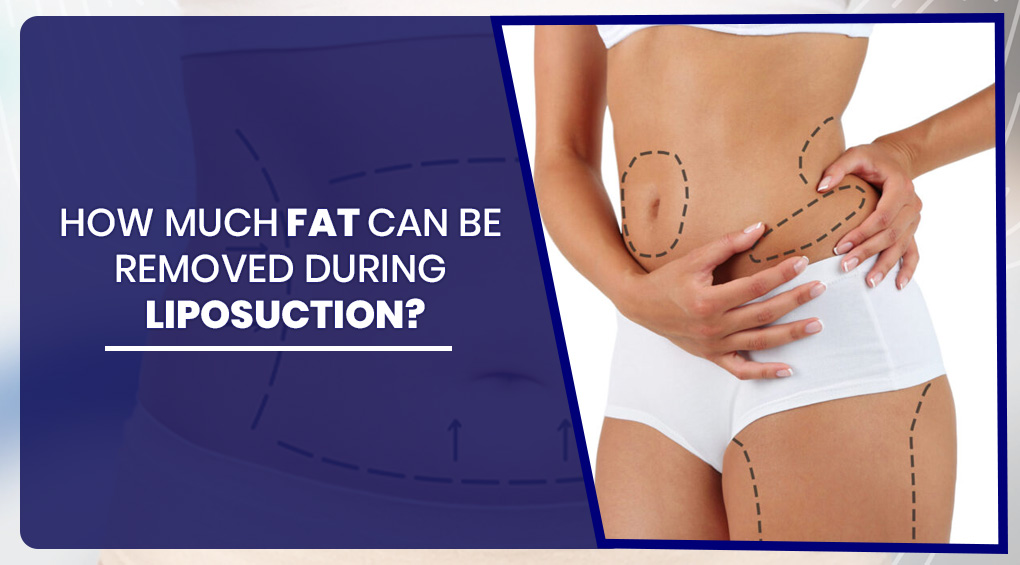
How Much Fat Can Be Removed During Liposuction?
The liposuction procedure is often seen as a magical solution to problem areas of fat, but how much fat can actually be sucked out in one sitting? Whether you are looking to get the procedure done or are simply interested, it is very important to know the boundaries and safety restrictions of liposuction before having any expectations.
What is liposuction?
Liposuction is a medical operation that surgically takes off fatty pockets from specific areas of a person’s body, such as stomach, thighs, arms, back, or chin. It isn't a surgery meant for losing weight. Rather, it's a body-shaping method used to refine one's figure and contour after diet and exercise have been tried without success.
Then, how much fat can actually be removed?
This is a very reasonable question, safety measures come first.
Safety measures usually state no more than 5 liters (roughly 11 pounds) of fat to be removed in one session of liposuction. This value can change based on:
- Body mass index (BMI)
- General health
- Area(s) being treated
- The surgeon's expertise
For example, a patient with high BMI might be more beneficial from this volume being removed, but it remains a medical decision evaluated individually.
Is More Fat Removal Always Better?
Not really. In fact, the most common complications that arise from flushing too much fat include:-
- Excessive Internal Bleeding
- Fluid Imbalances
- Irregular Skin Contour
- Prolonged Skin Recovery
Additionally, your skin's capacity to retract post-fat removal is minimal. After a certain point, skin retraction due to fat removal is limited and may lead to uneven **buoyancy** or slumping skin which makes the entire cosmetic procedure pointless.
Multiple Sessions vs One-Time Procedure
In some scenarios, a plastic surgeon might suggest staged liposuction— also known as fat removal Surgery in multiple sessions that are weeks or months apart. This can be more effective for patients who do require extensive fat reduction but need to be more conservative for a single procedure.
Liposuction Is Not For Weight Loss – This Is Why
Even though 5 liter of fat is perceived as excessive, it doesn’t necessarily mean that body weight will reduce substantially. That’s because the density of fat is less than that of muscle or bone. In most cases, a patient only experiences 1 – 3kg reduction in weight. The visual change, on the other hand, is far more significant.
It’s best for:-
What Happens After Liposuction?
In general, patients can return to light work rest for two to three days and full work within a week or two, but this depends on the technique used (traditional vs. laser vs. VASER).
Patients see the results after the swelling goes down, and fully after three months.
How Fat Can be Removed Based on:-
- Underlying health conditions can affect how much fat can be removed. Issues such as diabetes or heart problems are potential limiting factors.
- Skin elasticity will also play a role: Good skin tone indicates better results after surgery.
- Type of Surgical Procedure: More modern methods like VASER or tumescent liposuction are less damaging to the areas surrounding the cut and allow for better fat removal due to increased accuracy.
The fat removal must still be proportionate, which only a good surgeon understands, so it varies greatly with experience.
Is There a Limit Per Area?
Yes, each area has its own ‘safe range’. Too much fat taken from a singular site leads to contour deformities and may even disrupt and harm surrounding tissues.
Can the Fat Removed Through Liposuction Come Back Later?
This is one of the most prevalent worries - and quite justifiably. The fat obtained through liposuction is not regained in the surgically treated area as long as the patient’s weight is stable: here’s why.
Liposuction eliminates fat tissue from certain places permanently, meaning those fat cells can’t be replaced. But that doesn’t mean you can’t become susceptible to gaining new fat post-surgery. If a person who has undergone liposuction gains some weight, the remaining fat cells in other places—or even in the treated area—will expand and could lead to changes.
For instance,
Someone with abdominal liposuction who subsequently increases in weight will not see fat accumulate in the abdomen, but will see fat accumulating in the untreated areas such as the arms, thighs, and even the back.
Some weight changes (2-4 kg) here and there will not affect the results bluntly, but significant weigh gain or loss would result in changing the shape of the body contour.
The secret to long-term results? Following an active plan, such as performing scheduled exercises, eating nutritious food, and drinking enough water. These things help maintain the new shape and contour surgically achieved and assist in not accumulating fat in other places.
So, yes, while the removed fat will not return, your lifestyle choices after surgery will determine how long your results endure.
The Bottom Line
Liposuction is not about eliminating fat to the extreme. It is more of an art of precise contouring. The aim is not to take out as much as possible, but to enhance the body in a refined manner which is effortless and pleasant.
Looking for Liposuction in Gurgaon?
If you’ve made the decision for liposuction and would want a procedure done safely with effective and natural results, then you may reach out to Dr. Preeti Yadav, a reputable plastic surgeon in Gurgaon. Achieving a proven record of 100% success, Dr. Preeti merges medical precision with artistic skill to discomfort and high speed recovery.
Schedule an appointment now and embark on the journey towards a confident you.