

FUT Hair Transplant: Benefits, Procedure & Recovery
Hair loss can affect both your appearance and your confidence. Whether you're dealing with a receding hairline, thinning hair, or more advanced baldness, finding the right hair restoration option can be challenging. Fortunately, modern hair transplant techniques can help restore lost hair and create natural-looking, long-lasting results.
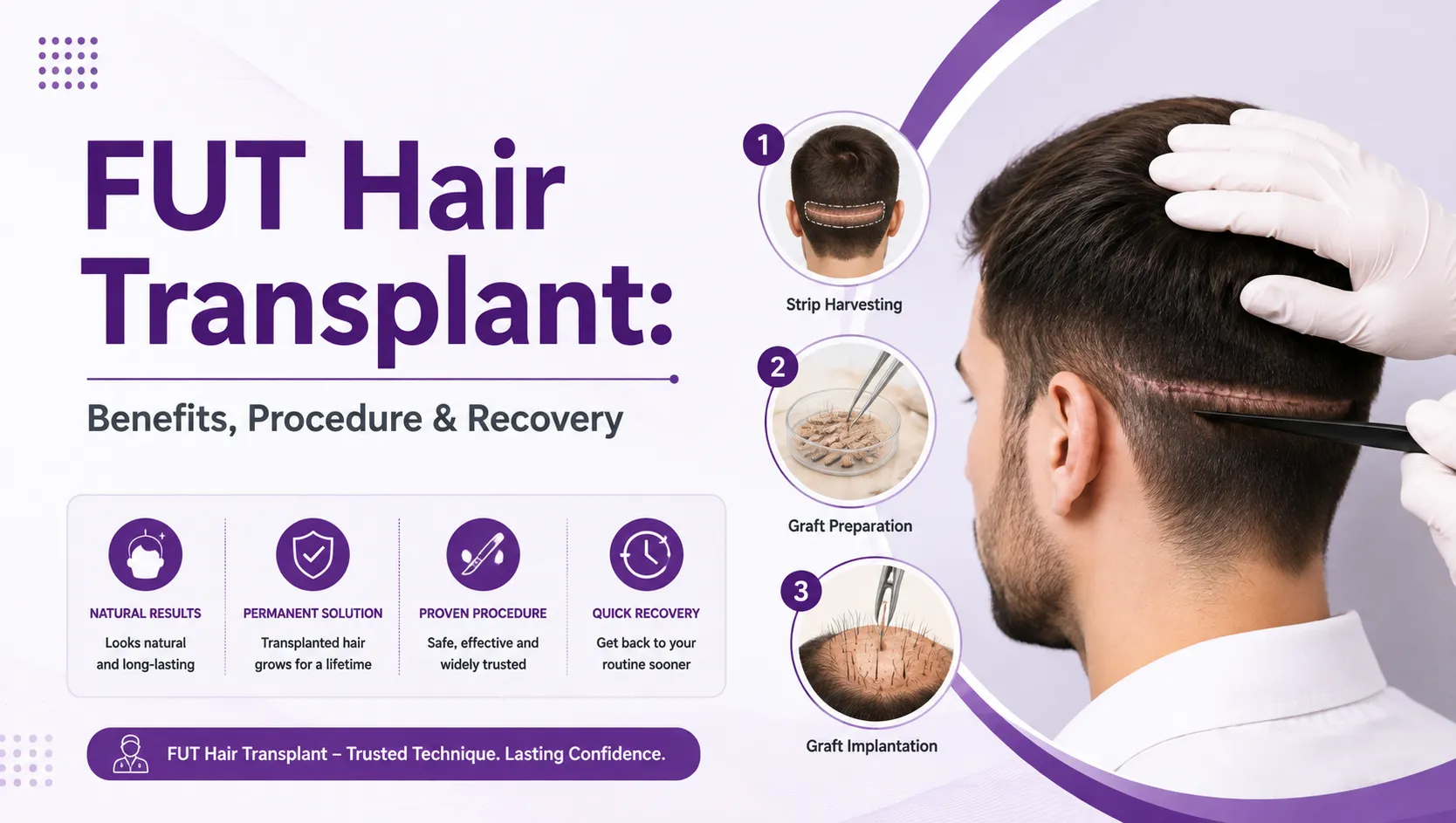
One of the established hair restoration techniques is FUT (Follicular Unit Transplantation) hair transplant. This procedure involves removing a strip of hair-bearing scalp from the donor area and carefully transplanting individual follicular units into areas affected by hair loss. FUT can be particularly useful for people who require a larger number of grafts for hair restoration.
In this blog, we'll explain what a FUT hair transplant is, how the procedure works, its benefits, recovery process, possible risks, scarring, expected results, and how to determine whether FUT is the right option for you.
What Is a FUT Hair Transplant?
FUT (Follicular Unit Transplantation) is a hair restoration technique that involves removing a thin strip of hair-bearing scalp from the back or sides of the head, where hair is naturally more resistant to hair loss. The donor strip is then carefully divided into individual follicular grafts, which are transplanted into thinning or bald areas of the scalp.
Unlike FUE, FUT allows surgeons to harvest a large number of healthy grafts in a single session, making it an excellent option for people with extensive hair loss. Once transplanted, these follicles continue to grow naturally and provide long-lasting hair restoration.
Who Is a Good Candidate for FUT Hair Transplant?
FUT is not appropriate for every person, but may be good for patients with:
- Male pattern balding or stable female hair loss
- High graft demand
- Good hair density in donor region
- Good scalp laxity
- Preference for high graft yield in one session
Although FUT may be good in these cases, very short haircuts may not be an option post-procedure because of a visible linear scar. A consultation with an experienced hair transplant surgeon is necessary to review all these factors.
FUT Hair Transplant Procedure: Step by Step
The first step is a thorough consultation with the doctor, in which he assesses your type of hair loss, the quality of donor hair, and the scalp, and also sets goals.
1. Strip Removal
A linear strip of scalp with healthy hair is carefully removed. An advanced suturing technique is used for closing the donor area.
2. Follicular Unit Preparation
The donor strip is divided under a microscope into individual units. The units contain hair follicles that are generally one to four. This prep work helps create a more natural density.
3. Recipient Site Creation
The area that is thinning and/or balding is assessed, taking into account the specific angle, direction, and density of the surrounding hair.
4. Graft Placement
Follicular units are placed in the recipient sites to create a natural hairline as well as evenly distributed hair.
Because of the variable number of grafts needed, the total time for the procedure is several hours.
Benefits of FUT Hair Transplant
Many patients prefer FUT for its reliable and long-lasting results.
Graft Yield is High
A single procedure of FUT will yield a much higher total number of grafts, making the procedure particularly well suited for the treatment of more advanced or extensive cases of alopecia.
Natural Appearance
Follicular units prepared carefully will allow the surgeon to reconstruct and recreate a natural hairline and subsequently blend the transplanted hair with the native or surrounding hair.
Conservation of Donor Area
Since the hair follicles are taken from a donor strip, it can be said that the donor area is utilized in an efficient and prudent manner.
Permanent Hair Growth
There are positive long-term consequences to the care and support of the transplanted follicles since the follicles will remain and continue to grow hair.
FUT Hair Transplant Results: What to Expect
Many patients want to know when they will see their FUT hair transplant results. While the procedure implants permanent follicles, it will take time for visible hair to grow.
A general timeline looks like this:
- Swelling and the start of the healing process last one week.
- Shedding of the transplanted hairs occurs over the first month, a typical post-op process.
- Hair growth begins in the 3rd to 4th month.
- Continues for several months.
- Final results of the FUT hair transplant are noticeable in 9-12 months.
Results can vary from patient to patient because of difficulty related to the donor area and characteristics of the hair, as well as attention to detail and skill of the surgeon and adherence to post-surgical care.
FUT Scar: What You Should Know
Patients are usually concerned about the FUT scar.
As part of the surgery, a strip of scalp is removed and a thin linear scar is left in the donor area. In the majority of cases, the scar is hidden by surrounding hair and becomes less noticeable with time.
Factors affecting the visibility of a scar include:
- The ability of the patient to heal
- Surgical technique
- Flexibility of the scalp
- Length of the hair
- Following post-op care
Patients who wish to have a short hairstyle should tell their doctor about their concerns before going through the FUT procedure.
Recovery After FUT Hair Transplant
Recovery after an FUT is easy if instructions are followed.
Recovery Process:
- Some minor pain, swelling, and tightness will occur and last for just a few days.
- Over the next few weeks, small scabs will form and fall off around the transplanted grafts.
- The donor area needs care like any other injury until it fully heals.
- You should wait for your doctor's instructions before returning to the normal routine of washing your hair.
- Take a break from swimming, strenuous exercise and sun tanning for a while.
You can expect to return to work in a few days. Your recovery time may be longer depending on the other demands of your job and your body.
FUT vs FUE Hair Transplant
Neither procedure is universally better. The most appropriate technique depends on your pattern of hair loss, donor area, hair goals, and your surgeon's recommendation.
Possible Risks and Side Effects
As with all surgical procedures, there is a risk associated with any kind of hair transplantation. However, complications occur hardly ever with an experienced surgeon.
Some common temporary side effects may be:
- Swelling
- Tenderness
- Tightness
- Numbness
- Light bleeding
- Scabs
Less frequent complications may include infection, delayed healing, widening of the donor scar, and temporary shock loss around the treated area.
The choice of an appropriate hair transplant surgeon will ensure the best results with the highest levels of safety for a procedure.
Why Choose Dr. Preeti Yadav for FUT Hair Transplant?
Dr. Preeti Yadav provides personalized hair restoration plans based on each patient's hair loss pattern, donor hair, and desired results. With 15+ years of experience in plastic and cosmetic surgery, she focuses on careful treatment planning and natural-looking outcomes.
Patients benefit from:
- Personalized FUT treatment planning
- Natural hairline design
- Careful evaluation of the donor area
- Focus on safe and precise techniques
- Detailed post-operative guidance and care
Her approach is focused on helping patients achieve natural-looking, long-lasting hair restoration while keeping their individual goals in mind.
Conclusion
FUT hair transplant remains one of the most effective solutions for people with significant hair loss who require a high number of grafts in a single session. While the procedure involves a linear donor scar, it offers excellent graft survival, natural-looking hair growth, and long-lasting results when performed by an experienced surgeon.
If you're considering FUT hair transplantation, consult Dr. Preeti Yadav, one of the best plastic surgeons in Gurgaon, for a personalized treatment plan tailored to your hair restoration goals.
Frequently Asked Questions
Is FUT hair transplantation permanent?
The transplanted hair is permanent. The surrounding hair may continue to thin due to aging and untreated hair loss.
Does FUT leave a scar?
Although a linear scar is created in the donor region, this scar is usually concealed by the surrounding hair.
How painful is an FUT transplant?
Since this is performed using local anesthesia, the discomfort level is low. There is usually some discomfort once the anesthesia has worn off.
How long is the recovery for FUT?
Most patients can return to their normal activities within a week. Healing and hair regrowth take many months.
What is better, FUT or FUE?
This is dependent on the individual. One hair loss pattern may make FUT a better option, while for another individual, the pattern may make FUE a better option.
How long should I take off of work for a FUT transplant?
Many patients with sedentary jobs take time off for just a few days, whereas more physical jobs may require a more extended period of time.
Related Hair Transplant Guide
You can also read our guide on FUE Hair Transplant: Benefits, Process & Recovery to learn more about FUE and how it compares with FUT.