


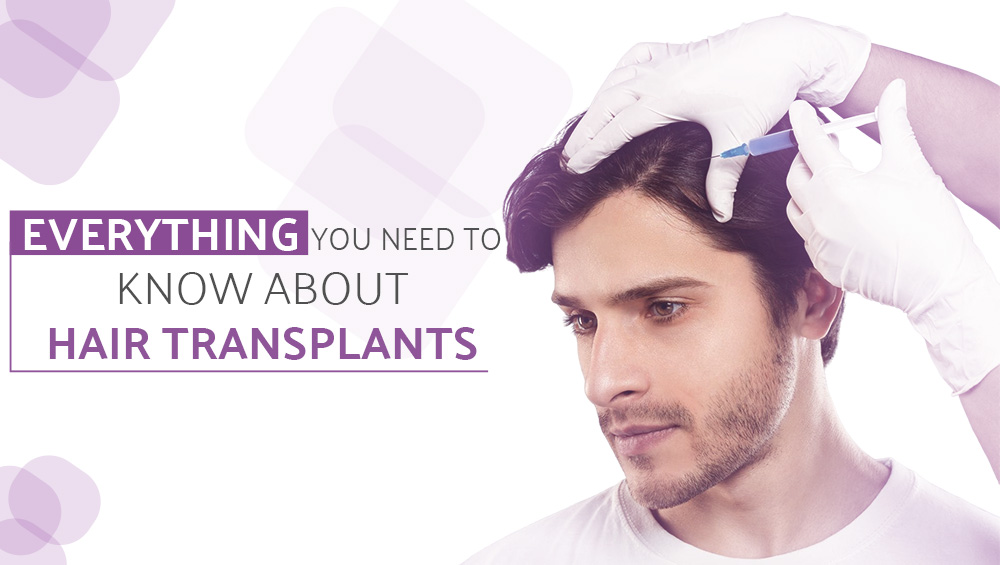
Everything You Need to Know About Hair Transplants
Losing hair is more common than most of us think. Some people notice thinning in their 20s, while others start seeing bald patches a little later in life. It doesn’t matter when it happens—hair loss almost always affects the way you feel about yourself. You may still be the same person, but every time you look in the mirror, that missing hair can make you feel less confident.
That’s where hair transplants come in. Over the last few years, they’ve become one of the most reliable and permanent ways to bring hair back naturally. And if you’re thinking about it, you probably have a few questions on your mind, like:
- What is hair transplant?
- Is the procedure painful?
- How much does a hair transplant cost in India?
- Are there any side effects I should be prepared for?
This blog will answer all of these questions in a simple, easy-to-read way—so you know exactly what to expect. And along the way, we’ll also explain why choosing the best plastic surgeon in Gurgaon makes all the difference in how safe and natural your results turn out.
What is a Hair Transplant?
A hair transplant is a safe and effective procedure for Baldness and hair loss. It involves taking some hair follicles from “donor area” (usually back or sides of the scalp, where hair growth is permanent) and transplanting them to areas with a loss of hair. The follicles you transplant are your own natural hair and will continue to grow for a lifetime which makes the results permanent and natural.
The two basic methods of hair transplant are
FUT (Follicular Unit Transplantation): A strip of scalp containing healthy hair follicles is removed, then hair follicles are separated and implanted in the areas with no hair.
FUE (Follicular Unit Extraction): one follicle is extracted and then placed in a bald or thinning area. The technique results in little scarring and quicker recovery time as well.
Both techniques are safe, and the choice depends on your hair condition, the number of grafts needed, and your surgeon’s recommendation.
The procedure is best suited for:
- Male or female pattern baldness
- Thinned-out hair
- Burn, scar or injury hair loss
A hair transplant's main benefit is that new hair follicles will grow with no restrictions, and as a result, confidence will be enhanced along with a fuller head of hair.
Do Hair Transplants Work?
Yes, they really do! And the best part? The hair looks natural because it’s your own hair, just moved around.
- New hair usually starts to grow after 3–4 months.
- Full, thick results appear after about a year.
- You can cut, comb, and style it like normal hair!
What is the cost of a hair transplant in India?
Patients often ask me, “How much is a hair transplant cost in India?” I always tell them it depends. On average it can be anywhere between ₹40,000 to ₹1,50,000. This depends on a few things:
The hair transplant cost depends on:
- Number grafts required: As the number of hair follicles that you need to be transplanted increases, so does the cost.
- Technique (FUE or a FUT): More advanced methods, like FUE, are generally more expensive.
- Clinic location, and the expertise of the surgeon. Although a reputed plastic surgery in a major metropolis may charge a higher price, the results and safety are well worth it.
- Additional treatments or care: The cost of PRP therapy, medications to maintain hair health or other additional services can affect the overall expense.
Consider it more of an investment, rather than a cost. A hair transplant that is done well will look natural and last forever. It will also restore your confidence each time you see yourself in the mirror..
Hair Transplant Side Effects & Risks
Like when you plant new seeds, sometimes the soil needs extra care. A hair transplant may have some side effects, but most of them are temporary:
- Swelling on the scalp.
- Redness or itching.
- Tiny scabs where new hair was placed.
In rare cases, there could be infection or scarring, but with proper care and the best plastic surgeon in Gurgaon, these risks are very low.
Recovery and Aftercare
Optimum blossoming of different components of your new corona of hair takes time. The healing process can be broken down as follows:
1st week: The formation of minor swelling accompanied by small scabs which heal rapidly.
Week 2-3: Hair loss from the transplanted area. Don’t be alarmed, this is a completely normal occurrence.
Months 3-4: Initiation of hair regrowth occurs.
Months 9-12: Achieve attaining the overall desired results.
Additional tips for maintaining the hairstyle:
- Do not itch the area of the scalp.
- Try not to expose the area to bright sunlight.
- Avoid exercise for 1-2 weeks post-procedure.
- Always abide by the guidelines given by the surgeon.
Why Choose Dr. Preeti Yadav
The surgeon you select will have a big impact on your results. It's important to choose a surgeon who is highly qualified and trustworthy.
Dr. Preeti is one of the most experienced plastic surgeons Gurgaon has to offer. She uses modern techniques and years of experience to provide patients with natural, safe and satisfying results. You can be confident that the hair transplant process will go smoothly and successfully with her guidance.
Conclusion
To some, hair loss may mean the lost of one of the most prized possessions a person can have. For most, it not only revolutionizes the entire look of the person. The procedure, by virtually any professional, is not only simple, but of utmost perfection and can give very long lasting results. While the cost of a hair transplant may vary, one must only settle for the surgeon whose helps more than the hair grows.
Keeping aside, this may be the time for the person to complete the look. In these moments, the focus can directly shift to the tailored care. The stoic bald spaces can slowly transform to more welcoming bald spaces which surely results in the confident look.
So are you on the fence to begin the most intriguing journey? Call to book the appointment with Dr. Preeti Yadav. Set your mind to it and the hair transplant will ignite your life.
Frequently Asked Questions About Hair Transplant
1. What do you need to know before a hair transplant?
Prior to a transplant, you should know that results are not immediate. You will never see the full effect of the procedure. You also need to set realistic expectations. Understand the difference between the FUT and FUE procedures, and find a qualified cosmetic surgeon. In a consultation, you will learn about the amount of grafts needed, recovery, and expected results.
2. Do’s and Don’ts after a hair transplant?
Do this: Make sure to follow all instructions given by your surgeon regarding aftercare. Take any prescribed medications and sleep with the head elevated.
Don'ts: Avoid scratching and direct sun, as well as heavy exercise, smoking, alcohol, or drinking for the first week.
3. How painful is a hair transplant?
Because the procedure is performed under local sedation, most patients report that it is painless. You may experience mild pressure or discomfort. However, there will be no sharp pain. A few days after your procedure, you may experience some slight discomfort or tightness. This can easily be treated with medicine.
4. What to do 1 week before a hair transplant?
Avoid smoking, alcohol, and blood-thinning medications (unless advised by your doctor). Don’t cut your hair too short—it helps the surgeon plan better. Stay hydrated and eat well.
5. Can I touch my grafts after 7 days?
By day 7, grafts begin to settle, but it’s best to avoid touching or scratching them until your doctor confirms it’s safe. Most surgeons advise waiting at least 10–14 days before gently touching the area.
6. Can I comb my hair after a hair transplant?
After 10-12 days you can start to comb carefully. Start by avoiding combing the transplanted region. Always use a wide-toothed comb that is gentle.
7. Is PRP necessary after a hair transplant?
PRP (Platelet-Rich Plasma) therapy is not mandatory, but it’s highly recommended. It improves blood supply to the scalp, speeds up healing, and boosts hair growth. Many surgeons combine PRP with hair transplants for better long-term results.