

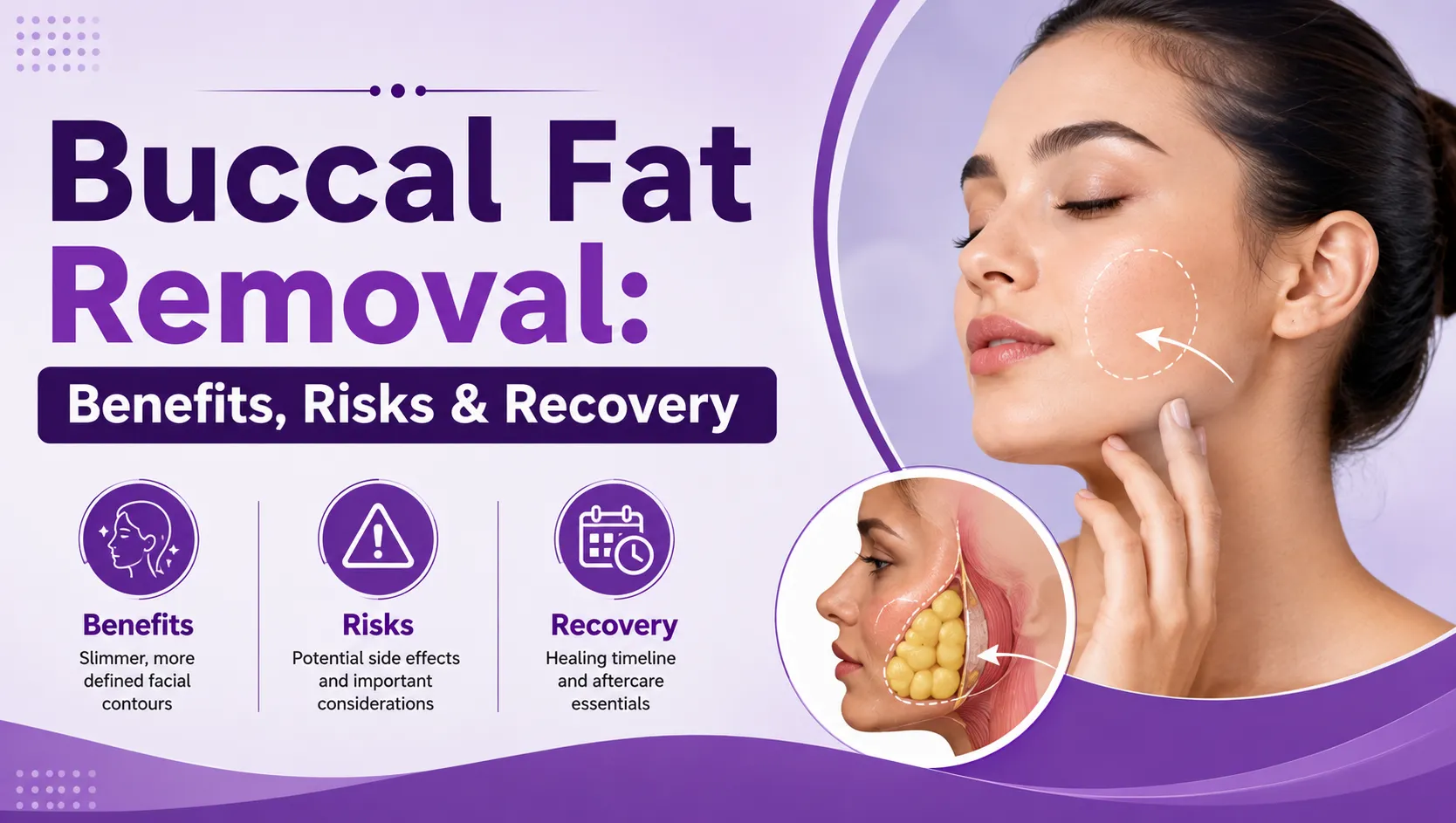
Buccal Fat Removal: Benefits, Risks & Recovery
Full, rounded cheeks are a natural facial feature, but some people may prefer a more defined and sculpted appearance. Cheek fullness can be influenced by genetics, facial structure, and the natural amount of buccal fat in the cheeks, even when a person has a healthy body weight.
Buccal fat removal is a cosmetic procedure designed to reduce excess fullness in the lower cheeks and create a more defined facial contour. Because the procedure involves removing a portion of the buccal fat pad through small incisions inside the mouth, there are no visible external scars.
In this blog, we'll explain what buccal fat is, how buccal fat removal works, its benefits, recovery, possible risks, expected results, and who may be a suitable candidate.
What Is Buccal Fat?
Buccal fat is a naturally occurring pocket of fat located within the cheeks. It contributes to the fullness and shape of the lower face, and its size varies from person to person.
Some people naturally have larger buccal fat pads, which can give the cheeks a fuller or rounder appearance. Others have less buccal fat and naturally more defined cheek contours.
Having fuller cheeks does not necessarily mean that someone is overweight or has excess body fat. Facial structure and genetics can play an important role in determining the appearance of the cheeks.
What Is Buccal Fat Removal?
Buccal fat removal is a cosmetic surgery to contour the face by eliminating fullness in the cheeks. This is accomplished by surgically removing fat from the buccal fat pads.
This surgery is performed by cutting into the mouth to access the fat, therefore, there is no scarring on the outside of the face. The objective of the surgery is to achieve facial balance. This is done by removing a select amount of fat from the fat pads, instead of completely removing the pads.
There are several reasons that people choose to undergo this surgery. Buccal fat removal is used to improve:
- Full cheeks
- Cheek contours
- Facial profile
- Jawline
- Symmetry and balance of the face
Who Is a Good Candidate for Buccal Fat Removal?
Not everyone seeking a thinner face is a good candidate for buccal fat removal. This procedure is better suited for a select group of patients.
You may be a good candidate if you:
- Have good general health
- Have stable body weight
- Have full/rounded cheeks
- Have realistic expectations
- Desire long-lasting permanent facial contouring
A thin face, loss of volume due to aging, or medical conditions with volume loss do not make one a good candidate for this procedure. Since aging is inevitable and fat loss is part of that, removing too much buccal fat can also make someone look hollow as they age.
Benefits of Buccal Fat Removal
More Defined Cheeks
Reducing excess buccal fat can create a slimmer and more defined appearance in the lower cheeks.
Improved Facial Contours
The procedure can enhance the natural contours of the cheeks and create better definition between the cheeks and jawline.
Long-Lasting Results
The removed fat does not grow back. However, significant weight changes and natural aging can still affect the appearance of the face.
Improved Facial Balance
Carefully planned fat removal can help create a more balanced appearance between the cheeks, chin, and jawline.
No Visible External Scars
Because the incisions are made inside the mouth, there are no visible surgical scars on the outside of the face.
Buccal Fat Removal Procedure: Step by Step
Following a detailed consultation that allows your plastic surgeon to evaluate your face and understand your goals, buccal fat removal will be determined.
During the surgery, the following will occur:
- Before the surgery, the option of local or general anesthesia will be discussed for comfort.
- Two incisions are made inside each cheek.
- The buccal fat pad is exposed.
- The desired amount of fat will be removed.
- The incision is closed using dissolvable sutures.
Depending on the circumstances, the surgery can be completed within one hour.
Recovery After Buccal Fat Removal
Post-op instructions are important for an efficient recovery.
In the early post-surgery days:
- Mild swelling and bruising are normal
- Minor discomfort is expected, but can be treated
- Patients are advised to eat soft foods and maintain good oral hygiene to prevent infection
Patients are instructed to:
- Rest for a short period to avoid strenuous activity
- Avoid smoking and alcohol consumption
- Take medication as prescribed
- Keep the appointments scheduled for follow-up
It is normal to be able to carry out most day-to-day activities after a few day; however, there will be an extended recovery period for the final facial contouring to occur.
Risks and Possible Complications
Buccal fat removal surgery has risks like all surgical procedures. The risk of complications is low when the surgery is performed by an experienced plastic surgeon.
Temporary side effects can include:
- Swelling
- Bruising
- Mild discomfort
- Temporary numbness
Rarer complications can be:
- Infection
- Slow healing
- Asymmetry of the face
- Excess removal of fat creating a gaunt look
One of the most important factors in safe, natural-looking and balanced results is choosing an experienced plastic surgeon who has an understanding of facial anatomy.
Buccal Fat Removal vs Other Facial Contouring Procedures
The right procedure depends on your facial anatomy, cosmetic goals, skin quality, and your surgeon's recommendations. In some cases, combining treatments may provide the most balanced facial result.
Why Choose Dr. Preeti Yadav for Buccal Fat Removal?
Dr. Preeti Yadav offers personalized facial contouring treatments based on each patient's facial structure, concerns, and aesthetic goals. Her approach focuses on achieving balanced and natural-looking results rather than excessive fat removal.
Patients benefit from:
- Personalized treatment planning
- Detailed facial assessment
- Focus on natural facial balance
- Careful surgical technique
- Comprehensive postoperative care
Conclusion
Buccal fat removal can be an effective option for people who want to reduce naturally full cheeks and achieve a more defined facial contour. However, it is not suitable for everyone, and removing too much fat may affect facial appearance as you age.
If you're considering buccal fat removal, Dr. Preeti Yadav, one of the best plastic surgeons in Gurgaon, can assess your facial structure and recommend an approach suited to your goals. A personalized consultation can help you understand whether buccal fat removal is the right option for you.
Frequently Asked Questions
1.Is buccal fat removal permanent?
Ans.The buccal fat removed is removed for good. Therefore, results are permanent.
2.Does buccal fat grow back?
Ans.The fat that is removed in the surgery is removed for good. However, large weight gain can make the face look different.
3.Will my face look too thin as I age?
Ans. It really depends on your fat distribution and the extent to which fat is removed. Good judgment and conservative fat removal help reduce patients’ appearance of too much fat being removed.
4.How painful is buccal fat removal?
Ans. The procedure is performed under anesthesia; therefore, the patients should not feel any discomfort during the procedure. Some discomfort might be experienced after the surgery, but it is usually mild and short-lived.
5.How long does recovery take?
Ans. Normally, patients are able to go back to normal daily activities in just a couple of days. Final healing and the last thinning of the face may take several months.
6.When will I see the final results?
Ans. Even though some improvements can be noticed while the swelling subsides, the fully healed tissues give the final results once the healing is fully complete.