


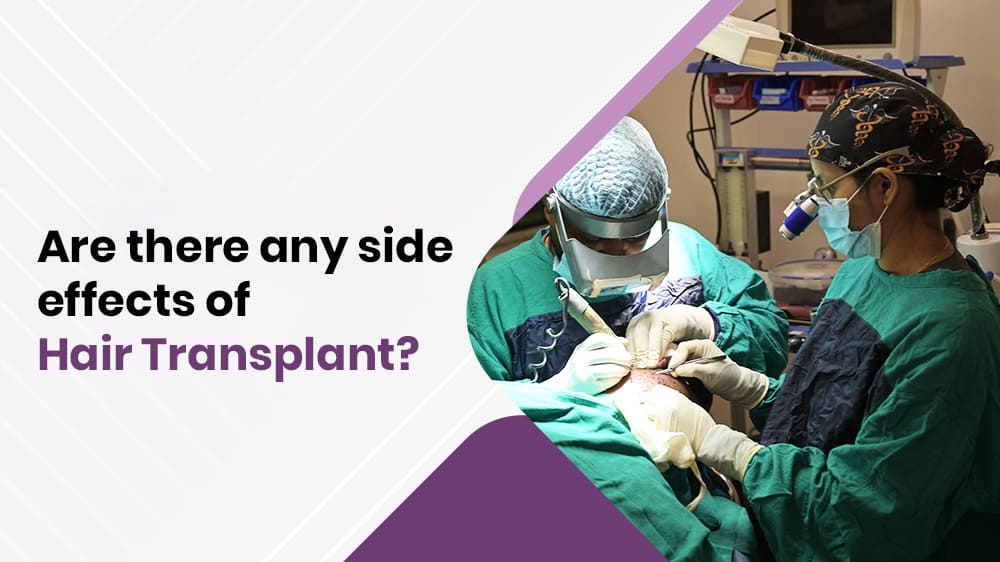
Are There Any Side Effects Of Hair Transplant?
Hair loss can affect confidence and self image, which is why many people consider hair transplant treatment. Hair transplant is a safe and common procedure, but like any surgery, it can have some temporary side effects. Knowing about them in advance helps patients feel prepared and stress-free.
In this blog, we discuss hair transplant side effects in an open and honest manner, focusing on patient awareness so that you can understand both the benefits and possible risks associated with the procedure, including the pre- and post-procedure period.
Common Temporary Side Effects Of Hair Transplant
These are normal side effects, which usually go away on their own after a few days or weeks.
Swelling of the scalp, Forehead or Eyes
- Mild swelling may appear on the scalp or on the forehead.
- In some instances, puffiness around the eyes may also occur
- Usually starts 1 to 2 days after the procedure
- Subsidies within 3-5 days with proper care
Pain, Tightness or Mild Discomfort
- Once the local anaesthesia wears off
- Described as a sensation of soreness or tightness in the scalp
- Easily managed with prescribed pain medication
- Improves significantly in a few days
Scabbing and Crusting Around Grafts
- Small scabs form around the transplanted follicles
- A normal sign of healing Scabs fall off naturally within 7 to 10 days
- Picking or scratching should be avoided
Itching during the healing phase
- Caused by skin healing and dryness
- Mild itching is normal
- Temporary and Manageable with Doctor-Recommended Solutions
- Scratching will remove them surgically and is therefore discouraged
Shock Loss (Temporary Hair Shedding)
- One of the most misunderstood side effects
- Newly transplanted hair or other hair in the area may fall out
- Occurs within the first few weeks
- It usually starts after 3 to 4 months.
Temporary Numbness or Reduced Sensation
- Affects the donor or recipient area
- Happens due to minor nerve irritation
- Sensation returns gradually, weeks to months
Rare But Possible Side Effects
These are very rare, particularly if the procedure has been performed properly, but a patient needs to be aware.
Infection after Hair Transplantation
- Can happen if hygiene afterwards is not good
- Presence of redness, warmth, pain or discharge
- Preventable with proper care and antibiotics if needed
Bleeding or Oozing
- Minor bleeding right after surgery
- Persistent or heavy bleeding is uncommon
- Requires medical attention if continued
Scarring
- The FUE technique may leave small dot-like scars
- The linear scar that results from the FUT technique
- Scars are usually covered by hair
Folliculitis
- Appears as small pimples or redness surrounding the grafts
- Usually temporary and treatable
- Does not affect long-term hair growth if managed early
Allergic Reactions or Rare Complications
- Rare reactions to anaesthesia or medications
- Severe complications are extremely rare
- Thorough pre-procedure evaluation minimises risk
When Should Hair Transplant Side Effects Be A Concern?
When to seek medical attention: If any of the following occur, seek medical attention:
- Severe or increasing pain
- Swelling that persists beyond one week
- Fever or chills
- Discharge of pus or unpleasant odour from the scalp
- Bleeding excessively
Sudden redness across the scalp is starting to spread. Early evaluation prevents complications and allows for appropriate healing.
How To Minimise Side Effects After Hair Transplant
Aftercare is an important aspect as it significantly contributes to the outcome.
Follow Post Procedure Instructions Carefully
- Adhere to Washing and Care Instructions
- Avoid touching grafts unnecessarily
Keep the Head Elevated While Sleeping
- Reduces swelling
- Improves comfort
Avoid Smoking, Alcohol, and Heavy Exercise
- Smoking impacts the blood supply to grafts
- A possible increase in swelling with the use
- Strenuous activity must be avoided for a few weeks
Use Only Prescribed Medications and Products
- Avoid self-medication
- Obey the dosage instructions strictly
Attend Scheduled Follow-Up Visits
- Helps with healing
- Allows early detection of any concerns
Conclusion
Hair transplant is generally a safe and effective procedure, but it’s normal to think about possible side effects before deciding. Most side effects are mild and happen only during the healing period, then settle on their own.
Good results depend a lot on choosing the right doctor and following proper after-care instructions. When treatment is done carefully and you take care during recovery, healing becomes smoother and results look more natural.
If you’re planning a hair transplant and want honest advice about safety, side effects, and suitability, you can consult Dr Preeti Yadav for personalised guidance and natural looking results.